


Shopping for a used Cadillac sedan under $30,000 brings two strong options forward: the ATS and the CT4. Both carry rear-wheel drive architecture, turbocharged powertrains, and a driving character that separates them from most compact rivals. Moreover, knowing which model year to target and what to inspect gives shoppers a clear advantage. Understanding how the platforms differ sharpens that advantage further.
What Your Budget Gets You by Model Year
The $30,000 ceiling defines a specific range in the used Cadillac sedan market. At the lower end, shoppers find ATS models from 2015 through 2017 in base trim with rear-wheel drive. These examples carry the 2.0L turbocharged four-cylinder and a genuine sport chassis. However, they require close attention to maintenance history. The $22,000 to $27,000 range opens access to 2018 and 2019 ATS Premium examples. Early CT4 models from 2020 and 2021 in base trim also land in that window. At the $27,000 to $30,000 ceiling, shoppers find 2021 and 2022 CT4 Premium sedans. Those carry upgraded interior materials and the updated Cadillac User Interface.
Trim level matters as much as model year. A 2019 ATS in Premium configuration carries more feature content than a 2021 CT4 in base trim. For this reason, shoppers should identify which features matter most before anchoring to a specific year.
ATS Platform and Powertrain: What the Service History Reveals
The ATS was built on GM’s Alpha platform, a rear-wheel drive architecture with roots in the ATS-V program. That chassis gave the sedan sharp steering response and strong body control. The standard turbocharged 2.0L four-cylinder produces 272 horsepower. It routes through an eight-speed automatic transmission. That powertrain is durable when properly maintained.
Turbocharged engines rely on clean, fresh oil to protect the turbocharger bearing shaft. When oil change intervals stretch or the oil degrades, the bearing receives inadequate lubrication under high exhaust heat. Over time, that leads to turbocharger wear. It reveals itself as hesitation at boost, unusual noise under acceleration, or increasing oil consumption. As a result, when reviewing a used ATS, requesting full service documentation is a critical step. Confirm that oil changes occurred at or before Cadillac’s recommended intervals. A vehicle with consistent 5,000-mile oil change records carries substantially lower risk. By contrast, one with sparse or undocumented history presents real uncertainty.
What to Inspect on a Used ATS
Beyond service records, a used ATS inspection should target three areas directly.
- Suspension wear is worth checking at the front strut mounts and rear shock absorbers. The Alpha platform’s firm calibration accelerates wear on cars driven on rough roads. A worn strut mount produces a thudding sound over road imperfections.
- The electronic limited-slip differential, available on Sport trim models, should be tested through slow turns. Uneven torque delivery or clicking sounds from the rear indicate wear that is not inexpensive to address.
- The CUE infotainment system in pre-2019 ATS models had documented touchscreen delamination issues. Check the screen surface under bright light for peeling or bubbling before finalizing any purchase.
A clean ATS with documented service history and a properly maintained turbocharger is a rewarding pre-owned buy. Furthermore, the platform earned its reputation through genuine engineering substance rather than marketing positioning.
CT4: What the Alpha 2 Platform Changed
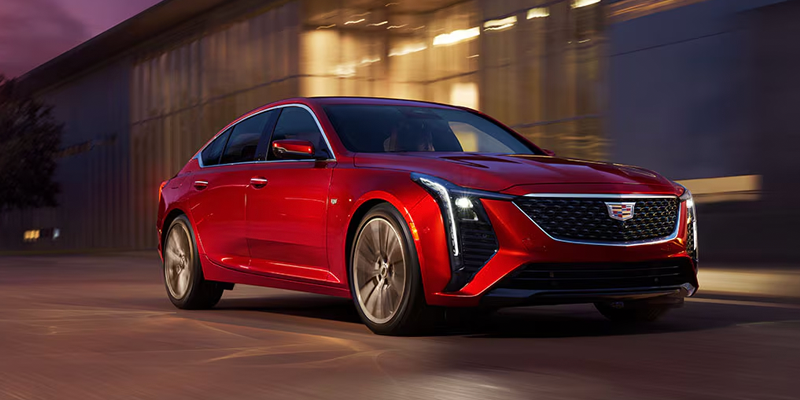
Cadillac replaced the ATS with the CT4 for the 2020 model year. The platform transition was not cosmetic. The CT4 rides on the Alpha 2 architecture. That update lengthened the wheelbase by 1.7 inches and widened the front track. Revised multi-link rear suspension geometry was also introduced. The result is a more composed ride over broken pavement. Additionally, the handling sharpness from the original Alpha car was preserved in the process.
The powertrain changed in a way that matters for used shoppers. The CT4 uses the 2.0L LSY turbocharged four-cylinder, producing 237 horsepower. That engine is a more refined unit than the ATS engine. The LSY combines direct and port injection, which reduces intake valve carbon buildup. That is a known long-term concern with direct-injection-only engines. Furthermore, the CT4 runs Cadillac User Interface 3.0, which addressed touchscreen durability problems from earlier CUE generations.
For shoppers cross-shopping the two platforms, the CT4 is not simply a newer ATS. Ride refinement, electronics integration, and engine calibration represent a generational step forward. Still, the trade-off is price. A comparable-year CT4 in the same trim tier sits $3,000 to $5,000 higher on the used market. That premium reflects the platform update and production year gap.
RWD vs AWD in the Used Cadillac Sedan Market
Both the ATS and CT4 were offered with rear-wheel drive and all-wheel drive. The choice between them carries real ownership implications beyond driving preference. RWD examples are lighter and carry a simpler rear drivetrain with fewer components to inspect. By contrast, AWD examples add a transfer case, front driveshafts, and a front differential to the mechanical picture.
For shoppers in the Louisiana market without sustained winter driving demands, RWD is the more straightforward ownership path. AWD adds value when the vehicle will see sustained wet roads. However, it also adds inspection points. A used AWD sedan should be checked for driveline vibration at highway speed. In addition, binding during slow turns on dry pavement and transfer case fluid service history are worth confirming. Front axle half-shafts in AWD Cadillac sedans can develop clunking sounds as they wear. Consequently, replacement costs for those components should factor into the total ownership budget.
RWD rear suspension components are worth inspecting regardless of configuration. Rear wheel bearing wear announces itself as a directional hum, and that hum changes pitch with steering input. Catching this early keeps repair costs contained.
Is a Certified Pre-Owned Cadillac Worth the Price?
Certified pre-owned (now CarBravo) Cadillac sedans occupy a specific category that shoppers misread with some frequency. The Cadillac CPO program sets defined eligibility requirements. A vehicle must be no more than six model years old and carry fewer than 75,000 miles to qualify. Every CPO candidate goes through a 172-point inspection by a factory-trained technician. Items that do not meet Cadillac’s standards must be repaired or replaced before certification is granted.
The coverage that comes with certification includes a powertrain limited warranty. That warranty extends six years or 70,000 miles from the original sale date, whichever comes first. In addition, bumper-to-bumper coverage is provided for 12 months or 12,000 miles from the CPO purchase date. That covers most electrical and mechanical components. Roadside assistance is included for the duration of the powertrain coverage period.
Why CPO Certification Changes the Value Equation
The price attached to a CarBravo sedan deserves honest evaluation, not automatic acceptance or dismissal.
- A non-CPO CT4 at $26,000 with 55,000 miles and no warranty leaves the buyer carrying full risk on the powertrain from day one. An out-of-pocket turbocharger replacement on this platform can reach $2,500 to $4,000 depending on parts and labor.
- A CPO CT4 at $28,500 with the same mileage provides powertrain coverage through the eligibility period. That coverage can represent $1,500 to $3,000 in protection depending on remaining term.
- The inspection requirement matters beyond the warranty itself. A CPO vehicle with documented repairs and technician sign-off carries less unknown history than a comparable non-certified example.
For shoppers buying a CT4 near the $30,000 ceiling, CPO certification provides a stable foundation. The value calculation depends on remaining warranty term and mileage position relative to the 70,000-mile threshold. Therefore, always confirm how many miles of powertrain coverage remain. Treating the CPO badge as a reason to pay a premium without reviewing coverage terms is a mistake.
Given that, the ATS is no longer CPO-eligible in most cases due to the six-year age limit. That makes service documentation even more critical for pre-owned ATS evaluation. Nevertheless, a pre-purchase inspection by a Cadillac-familiar independent technician provides comparable assurance. That inspection costs between $100 and $200 and protects against surprises that surface after the sale is complete.
Connect with us