


Brake systems in modern Cadillacs are engineered for precise control, consistent pedal feel, and confident stopping power under a wide range of driving conditions. Unlike basic braking systems, Cadillac brake components operate within tighter tolerances and rely on integrated electronic monitoring. Understanding how these systems wear, how warning signs present themselves, and why timing matters is essential to maintaining safety and performance.
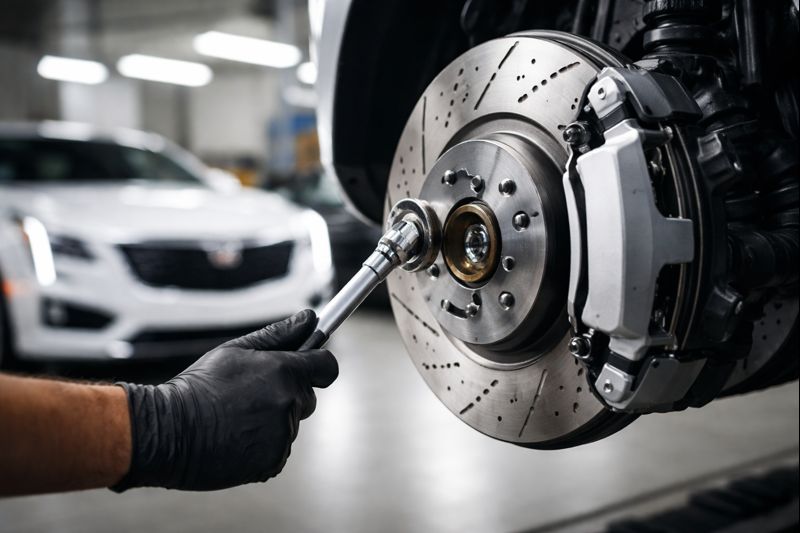
This guide explains how Cadillac brake systems function, what causes wear, and how to recognize when service is required before damage or safety risks escalate.
How Cadillac Brake Systems Work
At a system level, braking involves more than pads pressing against rotors. Cadillac brake systems are designed to balance stopping power, heat management, and smooth operation while working in coordination with traction control, stability systems, and driver assistance features.
Key components include:
- Brake pads that create friction to slow the vehicle
- Brake rotors that absorb and dissipate heat
- Calipers that apply even pressure to the pads
- Brake fluid that transfers force from the pedal to the brakes
- Electronic sensors that monitor wear and system behavior
Because these components work together, wear or failure in one area often affects the entire system.
When Brake Pads Typically Need Replacement
Brake pad lifespan varies significantly depending on driving habits, vehicle weight, and road conditions. In Cadillac vehicles, pads may last anywhere from moderate to extended mileage ranges, but mileage alone is not a reliable indicator.
Frequent city driving, aggressive braking, and repeated short trips increase pad wear due to constant heat cycling. Highway driving and smooth braking habits generally extend pad life.
Rather than relying on mileage, Cadillac owners should focus on system feedback and inspection results.
Warning Signs That Indicate Brake Service Is Needed
Brake systems often provide early indicators before performance is compromised. Recognizing these signs early helps prevent rotor damage and loss of braking efficiency.
Common signs include:
- Squealing noises caused by wear indicators contacting the rotor
- Grinding sounds indicating pads are fully worn and metal contact has begun
- A soft or spongy brake pedal suggesting fluid or hydraulic issues
- Vibration or pulsation felt through the pedal during braking
- Increased stopping distance under normal driving conditions
Electronic brake wear sensors may also trigger dashboard alerts when pad material reaches a critical threshold.
Brake Warning Lights and Electronic Monitoring
Modern Cadillacs use electronic monitoring to track brake wear and system health. A brake warning light does not always indicate immediate failure, but it should never be ignored.
Dashboard alerts may indicate:
- Low brake pad material
- Brake fluid level concerns
- Electronic parking brake system issues
- System communication faults affecting stability or traction control
Because braking systems interact with multiple safety systems, unresolved alerts can reduce overall vehicle safety even if basic braking still feels normal.
Rotor Wear and Why It Matters
Rotors play a critical role in heat management. When brake pads wear beyond their service limit, they can score or overheat rotors. Damaged rotors reduce braking efficiency and can introduce vibration or noise even after new pads are installed.
In luxury vehicles like Cadillac, rotor replacement or resurfacing is often recommended when:
- Rotors fall below minimum thickness
- Heat spots or warping are present
- Pad wear has caused uneven rotor surfaces
Replacing pads without addressing rotor condition can compromise braking performance and shorten the lifespan of new components.
Brake Fluid and Hydraulic System Health
Brake fluid is often overlooked, but it is essential to braking performance. Over time, brake fluid absorbs moisture, which reduces its ability to withstand heat and maintain consistent pressure.
Degraded brake fluid can lead to:
- Reduced braking response during repeated stops
- Increased pedal travel
- Internal corrosion within brake components
Periodic brake fluid inspection and service help maintain consistent pedal feel and prevent long term system damage.
Why Luxury Vehicles Require Timely Brake Service
Cadillac brake systems are designed to deliver smooth, controlled stopping rather than abrupt engagement. This refinement depends on precise component interaction.
Delaying brake service can result in:
- Accelerated rotor damage
- Increased repair scope
- Reduced effectiveness of electronic safety systems
- Compromised braking consistency during emergency situations
Addressing brake wear early preserves system integrity and supports the performance Cadillac vehicles are engineered to deliver.
Driving Habits That Affect Brake Wear
Brake wear is heavily influenced by how the vehicle is driven. Factors that accelerate wear include:
- Frequent stop and go traffic
- Aggressive braking habits
- Carrying heavy loads
- Driving in hilly or mountainous areas
Adopting smoother braking techniques and allowing more following distance can extend brake component life and improve overall driving comfort.
Final Perspective
Brake systems are one of the most critical safety components in any Cadillac. Because these systems operate as a coordinated network rather than isolated parts, timely inspection and service are essential. Listening to warning signs, responding to alerts, and understanding how braking components wear helps owners maintain safety, performance, and long term reliability.
Staying proactive with brake service ensures Cadillac vehicles continue to deliver confident, controlled braking in every driving situation.
Connect with us