


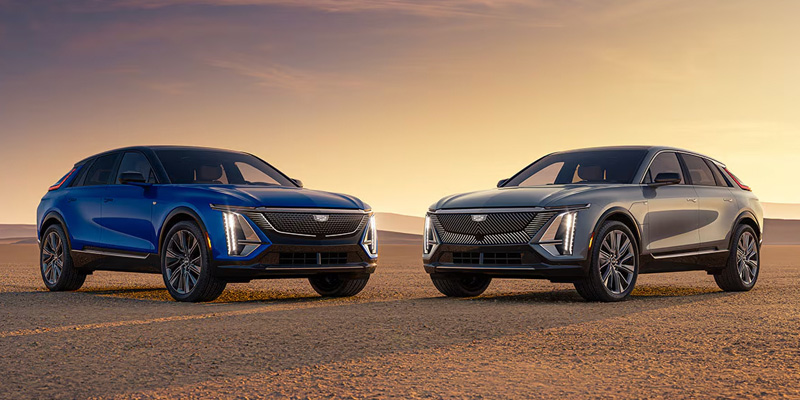
The Cadillac LYRIQ is built on GM’s Ultium EV platform, engineered around a large-format battery pack and high-capacity charging architecture. Understanding how it charges means understanding three things: battery size, charging power levels, and how real-world charging curves behave.
If you are considering an electric SUV, the key questions are practical. How long does it take to charge at home? How fast is DC fast charging on a road trip? How many miles do you gain in ten minutes? This guide breaks down those answers with system-level clarity.
Battery Architecture and Capacity
The LYRIQ uses a 102 kWh Ultium battery pack. That capacity determines both maximum driving range and how much energy must be replenished during charging.
Estimated range varies slightly by configuration, but rear-wheel-drive versions typically deliver over 300 miles on a full charge under EPA testing. All-wheel-drive versions may see a slight range adjustment due to added drivetrain load.
Battery size directly affects charging time. A larger battery provides more range but also requires more energy input during a full recharge. That is where charging speed and power level matter.
Charging Levels Explained
There are three primary charging scenarios for the LYRIQ:
Level 1 Charging (120V Household Outlet)
Level 1 charging uses a standard household outlet. It is the slowest charging method.
- Adds roughly 3 to 4 miles of range per hour
- Best used for overnight top-offs or emergency charging
- Not ideal for fully replenishing a depleted battery
Level 1 works for low-mileage drivers but is not the primary solution for most owners.
Level 2 Charging (240V Home or Public AC Charging)
Level 2 charging is the standard daily charging solution for EV owners.
- Requires a 240V outlet or professionally installed home charging unit
- Adds approximately 20 to 30 miles of range per hour depending on amperage
- Can recharge the battery overnight from a low state of charge
With a properly installed Level 2 charger, most owners can comfortably recharge from 20 percent to 80 percent overnight. This is the practical daily use case.
The LYRIQ supports robust onboard AC charging capacity, meaning it can efficiently convert AC power to DC power for the battery without excessive loss.
DC Fast Charging (Public High-Power Charging)
DC fast charging is designed for long-distance travel.
The LYRIQ supports DC fast charging up to approximately 190 kW. That power level allows significant range recovery in short stops.
Under optimal conditions:
- Up to 76 miles of range can be added in about 10 minutes
- 10 percent to 80 percent charging can occur in roughly 30 to 40 minutes depending on temperature and station output
Charging speed is not constant. EVs follow a charging curve.
Understanding the Charging Curve
EV batteries do not charge at maximum power from 0 to 100 percent. The fastest charging occurs between roughly 10 percent and 60 percent state of charge. After that, power tapers to protect battery longevity and manage heat.
This is why road-trip charging strategy typically involves:
- Charging from about 10 percent to 70 or 80 percent
- Continuing the drive rather than waiting for 100 percent
The LYRIQ’s thermal management system actively regulates battery temperature during charging to maintain optimal performance and preserve long-term durability.
Connector Compatibility and Public Charging Access
The LYRIQ uses the CCS charging connector for DC fast charging. For AC charging, it uses the standard J1772 connector.
This allows compatibility with:
- Most major public charging networks in North America
- Home-installed Level 2 charging stations
- Public Level 2 stations at workplaces and retail locations
Adapter solutions are evolving across the industry, but CCS compatibility provides broad access to established high-speed charging networks.
Home Charging Installation Considerations
Installing a Level 2 charger at home typically requires:
- 240V electrical service
- Professional electrician installation
- Circuit breaker panel capacity verification
Charging speed depends on the amperage of the installed unit. Higher amperage units deliver more miles per hour.
For homeowners, this becomes the primary convenience advantage of EV ownership. Instead of visiting a gas station, the vehicle charges overnight in the garage.
Charging Cost Estimates
Charging cost depends on local electricity rates.
To estimate cost:
- Multiply battery capacity (102 kWh) by local electricity rate
- For example, at $0.14 per kWh, a full charge would cost approximately $14
Actual costs vary based on:
- State of charge at plug-in
- Charging losses
- Time-of-use electricity rates
- Public DC fast charging pricing models
Home charging is generally more cost-effective than public fast charging.
Regenerative Braking and Range Recovery
The LYRIQ uses regenerative braking to capture energy during deceleration. When lifting off the accelerator or braking, the electric motor reverses function and sends energy back to the battery.
This system:
- Improves urban efficiency
- Extends overall driving range
- Reduces wear on traditional brake components
Driving style and terrain influence total range. Urban stop-and-go driving can sometimes yield better efficiency than high-speed highway travel due to regenerative energy capture.
Real-World Road Trip Planning
Long-distance EV travel depends on:
- Charging station availability
- Weather conditions
- Driving speed
- Elevation changes
Cold temperatures can temporarily reduce range and charging speed due to battery chemistry limitations. The LYRIQ’s thermal system mitigates this through battery preconditioning when navigating to a fast charger.
Preconditioning warms or cools the battery before arrival, enabling faster charging once plugged in.
Is the LYRIQ Practical as a Daily EV?
For most drivers, the answer depends on commute length and access to home charging.
The combination of:
- 300-plus mile range
- Strong DC fast charging capability
- Overnight Level 2 convenience
positions the LYRIQ as a fully practical primary vehicle for many households.
The transition from gasoline to electric is not about eliminating stops entirely. It is about shifting refueling behavior from weekly fuel station visits to overnight home charging with occasional fast charging during extended trips.
The LYRIQ’s charging system is engineered for that transition.
For drivers evaluating electric SUV ownership, understanding how battery capacity, charging speed, and infrastructure work together provides clarity. Charging is not simply about time. It is about power delivery, thermal management, and energy strategy designed for daily confidence.
Connect with us