Blog / Hammond Cadillac Service

Blog

All Hammond Cadillac Service Hammond Cadillac Dealer Ross Downing Cadillac Service 2025 Cadillac XT4 Awards Cadillac XT5 Car Care & Service Escalade IQ Hammond Used Pre Owned Cadillac
How Many Miles Can a Cadillac Escalade Last With Maintenance

How Many Miles Can a Cadillac Escalade Last With Maintenance

How many miles can a Cadillac Escalade last when service stays current? The answer varies by vehicle history, mileage, repair records, and care. However, scheduled maintenance gives owners a clear way to protect the SUV as miles build. Cadillac uses mileage intervals, the Oil Life System, and the Owner’s Manual to guide service. Therefore, a mileage based plan gives a more accurate path than a fixed calendar schedule. Start With the 7,500 Mile Service Rhythm Cadillac uses a recurring 7,500 mile rhythm for core maintenance on gasoline powered vehicles. That interval includes oil and filter service plus tire rotation. Therefore, these tasks form the base of an Escalade maintenance plan. Oil service protects internal engine parts from heat, deposits, and friction. The Oil Life System tracks operating data and signals when service is due. However, owners should still follow the exact guidance in their Cadillac Owner’s Manual. Tire rotation moves each tire to a different position on the SUV. As a result, tread wear can stay more even across all four corners. Rotation also gives the service team another chance to inspect tread, pressure, and visible damage. A recurring visit may include several basic checks: Oil and filter service supports clean lubrication inside the engine. Tire rotation helps distribute tread wear across the vehicle. A visual inspection can identify leaks, tire damage, or worn brake parts. These recurring items matter because later service builds on them. Therefore, a missed early interval can leave gaps in the vehicle’s maintenance record. What Changes Between 22,500 and 60,000 Miles? This mileage range adds more inspection and replacement items to the recurring service rhythm. Filters, brakes, tires, battery health, and coolant may need closer attention. Therefore, the service visit begins covering more than oil and rotation. Engine air filters help keep debris from entering the intake path. Cabin filters clean incoming air before it reaches the passenger area. As a result, replacement timing matters when either filter becomes restricted. Brake inspections also become more important as mileage rises. Technicians can measure pad material and review rotor condition during service. Therefore, the owner can see how much material remains before replacement becomes necessary. Battery testing can also reveal reduced starting reserve before a no start event occurs. In addition, coolant checks help confirm fluid level and visible condition. These items may not need replacement at the same mileage on every Escalade. For this reason, service records become useful during this phase. They show what has already been completed and what still needs review. Maintenance From 60,000 to 90,000 Miles Mileage from 60,000 through 90,000 brings more mechanical items into the service discussion. Cadillac’s general guidance includes transmission service, belts, hoses, shocks, and struts in later mileage ranges. Transmission fluid supports lubrication, heat control, and hydraulic operation inside the transmission. Therefore, correct service timing matters for smooth gear changes and internal protection. The exact interval should come from the Escalade Owner’s Manual. Belts and hoses also deserve closer inspection as age and mileage rise. Rubber parts can harden, crack, swell, or lose tension. As a result, visible wear can signal the need for replacement before a failure occurs. Shocks and struts control wheel movement and body motion over bumps. Worn parts can change ride control, tire contact, and steering response. Therefore, inspection matters when the SUV begins showing new movement, noise, or uneven tire wear. At this stage, owners should compare current mileage with completed service. That comparison keeps the next visit tied to the vehicle’s actual history. What Should You Review After 90,000 Miles? Higher mileage service combines scheduled items with a careful review of previous maintenance. Spark plugs, differential service, fluids, and wear parts may need attention. Therefore, records become more useful as the odometer climbs. Spark plugs create the spark that starts combustion inside each cylinder. Worn plugs can lead to harder starts, rough running, or reduced fuel efficiency. The correct replacement interval can vary by engine and model year. Differential fluid protects gears that divide power between the drive wheels. In addition, four wheel drive models may require added drivetrain checks. Exact service timing should follow the correct Owner’s Manual. Before scheduling higher mileage work, review these records: Confirm the last oil service, tire rotation, and brake inspection. Check whether transmission, differential, and coolant service has already been completed. Note any previous suspension, battery, belt, hose, or spark plug work. This review can prevent duplicate service and reveal missed items. Therefore, the next appointment can focus on what the Escalade still needs. How Maintenance Connects With Escalade Longevity How many miles can a Cadillac Escalade last cannot be answered with one guaranteed number. Independent data can describe broad trends, but each SUV develops its own service history. Therefore, the more useful question is whether maintenance has kept pace with mileage. Independent vehicle lifespan data can provide broad context for higher mileage ownership. However, those figures describe groups of vehicles and cannot predict the future mileage of one Escalade. Service history adds context to any higher mileage SUV. Regular oil changes support engine lubrication. Tire care, brake inspections, fluid service, and scheduled replacement items also keep major components under review. However, maintenance cannot prevent every repair. Age, prior damage, towing history, climate, and previous service quality can all shape future needs. Therefore, a technician should inspect the specific Escalade instead of relying only on mileage. Owners considering a higher mileage Escalade should review records before purchase or continued ownership. A complete file can show whether major intervals were completed when due. Build the Schedule Around Your Exact Escalade Cadillac gives owners several tools for planning service. The Owner’s Manual provides the exact maintenance schedule for a specific model year and powertrain. In addition, the myCadillac app can display service information for supported vehicles. Start with the current odometer reading. Then compare that mileage with the maintenance history and the correct manual. Therefore, you can identify which recurring tasks and larger milestones are due next. The Oil Life System adds another useful signal for engine oil service. However, it should work with the manual and service history, not replace them. A service advisor can also review prior dealership records when available. Ross Downing Cadillac Certified Service can work with you to build a maintenance plan around your Escalade’s current mileage and completed service. Bring your service records when possible. Then compare them with the Owner’s Manual before approving new work. That process gives the next service visit a clear starting point.
Cadillac Service Appointment Wait Times in Hammond

Cadillac Service Appointment Wait Times in Hammond

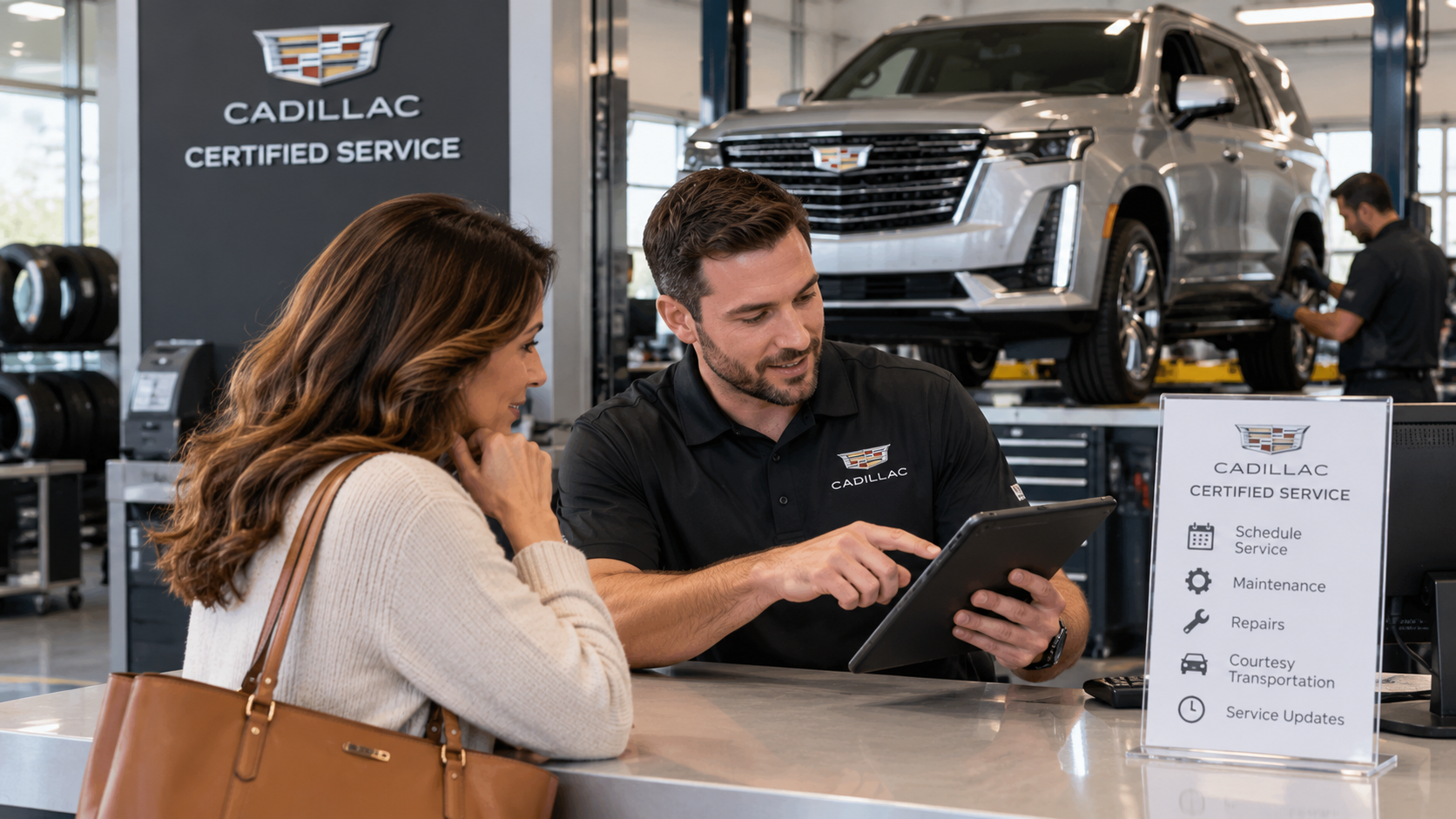
A Cadillac service appointment can make it easier to plan your day before you arrive. You can share the reason for the visit, ask about transportation, and discuss a likely pickup window. However, a booked time does not promise a fixed completion time. Routine maintenance, diagnosis, parts needs, and repair findings can each change the schedule. For this reason, knowing what the appointment covers can make the visit easier to plan. What a Cadillac Service Appointment Reserves A Cadillac service appointment reserves a planned arrival time with the service department. It gives the team notice about your vehicle, requested work, and timing needs before check in. Therefore, the advisor can begin with more context when you arrive. Does an appointment guarantee a short wait? No. The appointment sets the intake plan, while the full timeline depends on the work requested. A routine oil change follows a known process. By contrast, a warning light may need testing before the repair can be scoped. The advisor may also need to confirm parts, warranty details, or technician availability. For this reason, the first estimate can change after inspection begins. A scheduled visit still gives you a better chance to discuss those variables before the vehicle enters the shop. When booking, share the main concern in clear terms. Include any warning lights, noises, leaks, or recent repair history. That information can make the opening conversation more focused. Can You Bring a Cadillac in Without an Appointment? You can ask the service department about walk in availability, but timing depends on the current shop schedule. The advisor first needs to review the requested work and the number of vehicles already in line. Therefore, walk in service can carry more uncertainty than a booked visit. A simple maintenance task may fit into the day more easily than a diagnostic concern. However, even routine work still depends on technician and bay availability. For this reason, calling before you arrive can save an unnecessary trip. If you plan to come in without an appointment, ask these questions first: Can the service team accept this type of work today? Is there a likely check in window for my vehicle? Should I plan to wait on site or arrange a ride? Those answers give you a clearer plan before you leave home. They also help the advisor set a realistic expectation for the visit. Why Routine Maintenance and Diagnosis Take Different Amounts of Time Routine maintenance follows a known set of steps. An oil change, tire rotation, or scheduled inspection has a defined task list before the vehicle arrives. Therefore, the service team can estimate the work more easily. Diagnostic work begins differently. A warning light, vibration, noise, or intermittent issue needs testing before the cause is known. The technician may scan for fault codes, inspect related parts, or reproduce the concern during a road test. That process can uncover a repair that was not clear at check in. As a result, the timeline may expand after the first inspection. The advisor may need your approval before added work begins. Parts can also add time after diagnosis. A repair may require a component that is not already in stock. Therefore, the team may need to order the part before work can continue. For that reason, two appointments scheduled at the same hour can finish at very different times. The service type sets the first part of the timeline. The findings after inspection shape the rest. When Courtesy Transportation Should Be Discussed Courtesy transportation should be discussed before the appointment when you know you cannot wait at the dealership. Cadillac Certified Service offers transportation support in qualifying service situations, but availability can vary by dealer and repair. Ask about a courtesy vehicle, rental option, shuttle, or other transportation support while scheduling. That gives the team time to explain what is available for your visit. A courtesy vehicle should never be assumed. Some repairs may qualify while others may not. Availability can also change from day to day. If transportation matters to your schedule, confirm these details before arrival: Is a courtesy vehicle available for this visit? Does the repair need to meet specific warranty requirements? What identification or insurance information should I bring? Is there a pickup or return time I need to plan around? That conversation can keep transportation from becoming a surprise at check in. It also gives you a clearer idea of how the service visit will fit into the rest of your day. What to Share When Booking Your Visit A clear service request gives the advisor better information before the vehicle arrives. Start with the main reason for the visit, then add details that could shape the timeline. If a warning light is on, describe when it first appeared. If you hear a noise, note when it happens and where it seems to come from. If the concern is intermittent, explain how frequently you notice it. Also share your current mileage and any recent repair history tied to the same issue. That gives the advisor more detail about the concern before check in. If timing is important, say so during scheduling. Ask whether the visit is likely to be a wait on site appointment or a drop off. Then ask when the team expects to provide the first update. Clear information at the start does not guarantee a faster repair. However, it can reduce confusion about what the team needs to inspect. Planning the Visit Around Your Day A Cadillac service appointment works best when the timing plan is discussed before the vehicle arrives. Ask what type of visit you are booking and how long check in may take. Also ask when the first update should come. If you are scheduling routine maintenance, the advisor may be able to give you a narrower window. If the visit involves diagnosis, plan for more uncertainty until testing is complete. Therefore, leave room in your schedule for a revised pickup time. You can also ask what may change the timeline. Parts, added findings, warranty review, and customer approval can all extend the visit. Knowing that before arrival makes it easier to plan work, family tasks, or transportation. Ross Downing Cadillac Certified Service can work with you to choose a service time that fits the work your vehicle needs. Share the concern when you book, ask about transportation before arrival, and confirm when to expect the first update. You can also review Cadillac maintenance guidance before scheduling. That preparation can make the day easier to manage from check in through pickup.

Cadillac Service Center Near Me for Recall Service

Cadillac Service Center Near Me for Recall Service

A Cadillac service center near me can be useful when you want to verify a recall before a repair visit. Moreover, an open recall means Cadillac has identified a specific issue tied to an eligible vehicle. Therefore, the first step is confirming whether your Cadillac is included. A VIN check provides that vehicle-specific answer before you schedule service. From there, the dealership can verify the campaign and plan the repair. How to Check Your Cadillac for an Open Recall How do you check whether your Cadillac has an open recall? A VIN recall check searches recall records tied to one specific vehicle. Therefore, the VIN's 17 characters identify that Cadillac within manufacturer and government records. You can find the VIN near the lower windshield on the driver side. It also appears on registration and insurance documents. Therefore, you can complete a check without opening the hood or visiting a dealership. NHTSA provides a recall lookup using a VIN or license plate. Furthermore, Cadillac provides recall resources through its ownership support channels. In addition, supported myCadillac app features can surface recall information for linked vehicles. A clear checking routine keeps the process simple: Locate the VIN first: Use the windshield plate, registration, or insurance card so the lookup matches your exact Cadillac. Run a vehicle-specific recall search: Review open campaign information through NHTSA or Cadillac ownership resources before scheduling service. Save the campaign details: Keep the recall number or notice available when contacting Ross Downing Cadillac for an appointment. A model name alone may not confirm recall eligibility. Production timing, equipment, and other vehicle records can separate included units from units outside the campaign. Therefore, VIN verification should come before assumptions based on a general recall announcement. What an Open Recall Means Does an open recall mean you will pay for the repair? Cadillac states that recall work completed at a GM dealer comes at no charge. Therefore, an open recall shows that required campaign work has not yet been recorded as complete for that vehicle. The repair may involve a part replacement, inspection, calibration, or another prescribed procedure. Therefore, the dealership first confirms the campaign tied to your VIN. Recall work is separate from routine maintenance. An oil change, tire service, or scheduled inspection follows the maintenance plan for the Cadillac. By contrast, a recall follows instructions issued for a specific campaign. That distinction also matters when other repairs are needed during the same visit. The recall repair can remain covered while unrelated maintenance carries its normal cost. Therefore, ask the service advisor to separate recall work from any other recommended service. If the notice includes special driving instructions, follow those directions before the appointment. Some campaigns may call for prompt action or specific precautions. The notice or dealer can explain the next required step. Recall Notices and Software Updates Are Different Is a software update the same as a recall? A software update and an official recall are separate types of vehicle notices. Furthermore, Cadillac vehicles can receive software updates for supported digital features and control modules. Some updates may install remotely through available connected services. Others may require dealership equipment. Therefore, seeing an update message does not by itself confirm a safety recall. By contrast, a recall has a formal campaign tied to eligible vehicles. It also includes a prescribed remedy for the identified issue. A software update may change software operation without carrying recall status. Maintenance reminders create another category. They can point toward scheduled items such as oil service or inspections. In addition, diagnostic alerts may report a detected vehicle issue that needs attention. Because several notices can appear through connected ownership tools, read the wording carefully. Look for a recall campaign number, repair instructions, or a direct recall status. When the message remains unclear, provide the VIN to the service department for verification. What Happens When You Schedule Recall Service What happens after you schedule recall service? Therefore, the dealership verifies your VIN, confirms the open campaign, and reviews the required repair procedure. That verification gives the service team the exact campaign instructions for your Cadillac. It also lets staff review whether parts or specific equipment are needed. Therefore, sharing the VIN when scheduling can make appointment planning more precise. Before the visit, gather the information tied to the notice and your vehicle: Bring the recall notice when available: The campaign number gives the advisor another reference during check-in. Have your VIN ready: The service team uses it to confirm eligibility and the required repair procedure. Share other service concerns separately: Describe unrelated noises, warning lights, or maintenance needs so staff can document them independently. Consequently, repair time varies by campaign. A software calibration may follow a different process from a physical part replacement. In addition, parts availability can shape appointment timing for certain campaigns. After the repair, the dealership records completion through the applicable service process. Keep your repair documentation with your maintenance records. Therefore, you have a clear record of what work was completed and when. Staying Proactive After the Recall Repair A completed recall closes one campaign, but future notices can still apply as your Cadillac ages. Therefore, keeping your contact information current supports timely manufacturer communication. In addition, the myCadillac app can provide recall and service tools for supported accounts. Cadillac account settings can also manage selected email and text notifications. In addition, periodic VIN checks give you another direct way to review open recall status. How can you keep track of future notices? Use connected Cadillac tools, maintain current contact details, and check your VIN periodically. These steps keep recall information tied closely to the vehicle you own. Ross Downing Cadillac can also verify open recall information before a service visit in Hammond. If a notice appears, have the VIN ready when you contact the service department. That gives the team the information needed to review the campaign before your appointment. Proactive recall checking does not require waiting for a warning light or mailed notice. A VIN lookup can confirm current status in a few steps. From there, you can schedule the required repair and keep the completed work with your Cadillac service records.

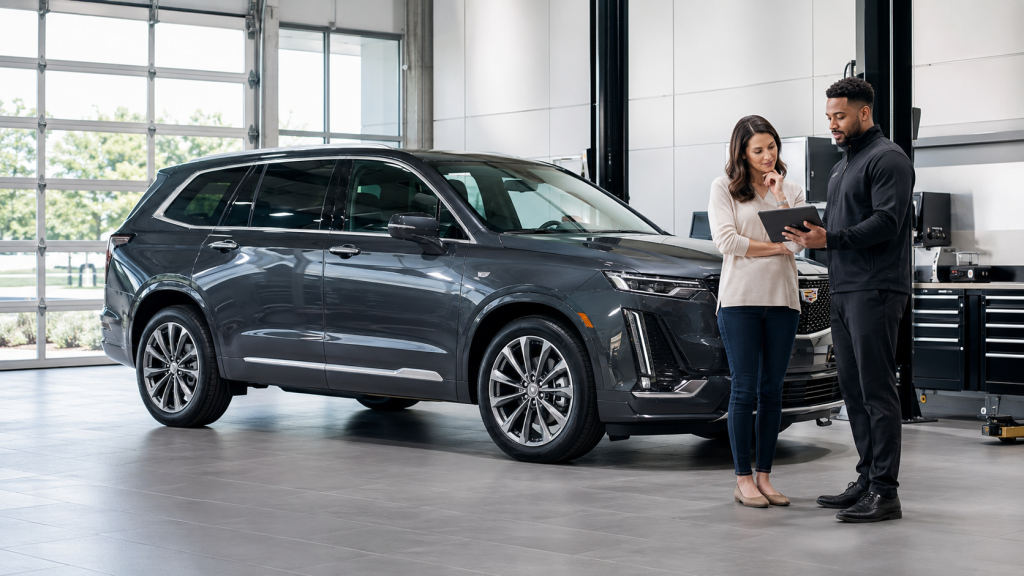
A dark gray Cadillac SUV sits in a service bay while a man and woman review a tablet.

Cadillac Service Near Me and Repair Pricing Questions

Cadillac service near me searches may begin when a warning light, noise, or driving concern appears. The next question usually involves price. Before approving work, owners should know what the estimate includes and which party pays each line. Therefore, clear questions can separate diagnosis, repair, warranty payment, recall work, and owner charges. A service advisor may begin with an initial diagnostic amount. That amount pays for technician testing and documented findings. However, it does not automatically include the repair. Once testing identifies the cause, the advisor can present recommended work and an itemized estimate. What Does Cadillac Service Pricing Include? A repair estimate may include diagnosis, parts, labor, taxes, supplies, and selected fees. Furthermore, each line represents a different part of the visit. Therefore, owners should ask which charges apply before testing begins. Diagnosis pays for the time and equipment used to trace the concern. For this reason, a warning light may point toward several possible causes. The technician may inspect wiring, scan vehicle data, test a component, or reproduce the concern on a road test. Ask whether the diagnostic amount remains due when you decline the repair. Also, ask whether it will be credited toward approved work. Cadillac states that a diagnostic charge may apply before warranty status is confirmed. When Cadillac approves the repair under warranty, that diagnostic charge is reimbursed. Parts pricing covers the components required for the approved repair. Labor pricing covers the technician time assigned to complete it. In addition, taxes, disposal charges, or shop supplies may appear as separate lines. Additionally, the first estimate should describe the diagnosed cause and proposed correction. It should also state the total you are approving. If any line is unclear, ask the advisor to explain it before work begins. Ask Whether the Repair Is Warranty Covered However, an active warranty does not make every service visit free. Coverage rests on the diagnosed cause, vehicle age, mileage, written terms, and repair history. Therefore, the dealership must complete diagnosis before confirming payment. Cadillac’s bumper to bumper limited warranty covers qualifying defects in materials or workmanship for four years or 50,000 miles. Covered repairs include parts and labor. Maintenance, normal wear, collision damage, misuse, and unauthorized alterations may remain owner paid. Ask which written warranty section applies to the repair. The answer may involve bumper to bumper, powertrain, emissions, or another Cadillac warranty. Furthermore, ask whether Cadillac must review the claim before work begins. Recall work follows another payment path. Cadillac states that eligible recall repairs carry no owner charge at a GM dealer. However, unrelated maintenance or repairs during the same visit may still carry charges. A Cadillac Protection Plan or another service contract also follows its own written terms. It may carry covered component lists, exclusions, deductibles, and claim steps. Bring the agreement or contract information to the appointment. Before approval, ask these questions: Which repair lines will Cadillac pay under the factory warranty? Which lines fall under a recall, service contract, or owner payment? Does a deductible apply, and when must it be paid? The written estimate should separate each payment source. That structure makes the owner total easier to review. What Should You Review Before Approving Cadillac Repairs? Owners should review the diagnosed cause, proposed correction, itemized price, coverage decision, and approval total. Start with the complaint written on the repair order. It should match the concern you described at check in. Next, review the diagnosis. Ask what test confirmed the failed part or repair need. A clear diagnosis should connect the reported concern with the proposed work. Then review every price line. Confirm the parts, labor, diagnostic amount, taxes, supplies, and other charges. Ask whether the quoted parts are new GM parts, remanufactured parts, or another listed type. Also, ask whether the estimate includes all current findings. The technician may recommend urgent work and separate work that can wait. Request a written explanation of the timing for each item. Therefore, your approval should cover a specific repair and dollar amount. Do not assume a general approval covers later findings. Ross Downing Cadillac states that added work requires owner authorization before parts or labor enter the visit. Keep a copy of the approved estimate or save the text message. That record gives you a clear reference at vehicle pickup. Ask What Happens if More Work Is Found Testing or disassembly may reveal another damaged part. The advisor should explain the new finding before continuing beyond your approved amount. Therefore, set your communication preference during check in. Tell the advisor whether you prefer a phone call or text message. Confirm who may approve work when another household member handles the visit. Also, set a dollar limit that requires fresh authorization. A revised estimate should list the added finding, new work, new price, and updated total. Ask whether the first repair must be completed before another concern can be tested. Furthermore, ask whether declining the added work changes reassembly charges or vehicle safety. Use these questions when the estimate changes: What new finding appeared after the first diagnosis or disassembly? Can the added repair wait, or does it create an immediate safety concern? What is the revised owner total after warranty or contract payment? You may approve all work, approve selected lines, or decline added work. Ask the advisor to document your choice on the repair order. Also, request notes about any unfinished repair for your records. Additionally, parts availability can change the schedule. Ask whether the vehicle will remain assembled and secure while parts are ordered. Discuss transportation options separately, since loaner and rental availability varies by dealership. Compare the Final Repair Order With Your Approval The final repair order records the concern, diagnosis, correction, parts, labor, and charges. Compare it with the estimate before payment. Each completed line should match work you approved. First, review the owner total. Then locate any factory warranty, recall, or service contract payment. Confirm that the deductible matches the written agreement. Next, read the technician notes. They should explain what was found and what was replaced or repaired. Ask whether the repair includes a parts or labor warranty from the dealership or manufacturer. Review any declined or deferred work as well. Confirm whether the vehicle is safe to drive and when the remaining repair should return for review. Keep the final order with your maintenance records. Ross Downing Cadillac documents concerns at check in and presents findings before added work receives authorization. The final repair order provides the record of completed work and charges. Therefore, owners can compare what they approved with what the service department completed. When a Cadillac service near me search leads you to Ross Downing Cadillac, bring your warranty and contract documents. Ask for an itemized estimate before approving repair work. Clear documentation gives every party the same repair scope, payment path, and final total.

Two men stand beside a white car, one holding a clipboard while the other points at the vehicle.

What to Expect at Your Cadillac Service Appointment

A Cadillac service appointment follows a defined process from check-in through pickup. Knowing what that process looks like removes most of the uncertainty surrounding a dealership visit. Each step serves a purpose. Understanding those purposes helps owners arrive prepared and ask the right questions. Leaving with confidence that the work is documented correctly starts at check-in. Check-In and What the Advisor Is Documenting The service advisor is your primary point of contact from the moment you arrive. At check-in, the advisor records your vehicle's mileage, confirms the vehicle identification number, and documents your concern description in detail. That documentation is not administrative routine. It is the foundation of the repair order, which drives every action taken on your vehicle during the visit. Concern description accuracy matters more than most owners realize. When warranty work is involved, the manufacturer requires three things on the repair order. The complaint, the cause, and the correction must all appear before a claim is authorized. A vague concern description creates a documentation gap. It can delay warranty authorization or require a return visit to correct the record. A specific description gives the technician a documented starting point. It also gives the advisor language that aligns with warranty claim requirements. "Intermittent clicking from the front left suspension at low speed over rough pavement" is an example of that level of detail. Beyond the immediate concern, the advisor will also review your vehicle's service history during check-in. That review identifies open recalls, recurring concerns, and approaching factory-scheduled maintenance intervals. Arriving with a clear description of your concern makes the intake process faster and more precise. Include context such as when the issue occurs or what conditions trigger it. The Multi-Point Inspection: What Technicians Review Every Cadillac Certified Service visit includes a multi-point vehicle inspection performed by a factory-trained technician. The inspection covers 27 categories. Those include fluid levels, braking components, tire condition, exterior lighting, belts and hoses, filters, suspension components, and battery condition. The findings are presented on a color-coded report. Green items have passed the inspection and require no immediate attention. Yellow items are approaching a service interval or show early wear worth monitoring. That classification matters because it tells you which items are urgent and which can wait. Red items require attention and the advisor will contact you before any additional work proceeds. No findings on the report result in automatic repairs. Every yellow or red item requires your authorization before labor or parts are added to the visit. That authorization step is important to understand. The inspection is a diagnostic and documentation tool, not a work order. When the advisor calls or texts with findings, they are presenting options and cost estimates for your review. You decide which items to address during the current visit and which to schedule separately. Furthermore, the findings sheet becomes part of your vehicle's service record. It carries forward to future visits and supports resale documentation. Courtesy Transportation: How Loaner Availability Works One of the most common questions surrounding a Cadillac service appointment is whether a loaner vehicle is provided. The answer depends on several factors. Understanding those factors prevents the frustration of arriving with an expectation that does not match what is available. Courtesy transportation vehicles are Cadillac models from the dealer's loaner fleet. Availability is determined by three factors: expected visit duration, the nature of the work, and the dealer's current fleet inventory. Appointments involving extended labor, parts orders, or multi-day diagnosis are most likely to qualify for a loaner. Routine visits such as oil changes or tire rotations are shorter in duration. Those appointments are more likely to be covered by a complimentary shuttle or a waiting area appointment. Warranty repairs that require manufacturer authorization and parts sourcing can extend beyond a single day. In those cases, a courtesy vehicle is the standard accommodation. However, loaner fleet inventory fluctuates. Scheduling in advance and confirming loaner availability at booking removes uncertainty. That also gives the service team time to reserve a vehicle for your visit. Walk-in appointments for extended repairs carry a lower probability of same-day loaner availability. Warranty Work vs Customer-Pay: How the Process Differs Not all service visits follow the same workflow. That distinction shapes your timeline expectations before you arrive. A warranty repair involves additional steps that a customer-pay oil change does not require. Those steps affect how long your vehicle will be at the dealership. For warranty repairs, the advisor submits a repair authorization request to Cadillac after the technician diagnoses the concern. That request includes the documented complaint, the technician's diagnosis, the proposed repair, and the parts required. Cadillac reviews the request and either approves the repair, requests additional diagnostic documentation, or denies the claim with a reason. That review process takes time that routine maintenance does not. The advisor will notify you of the authorization status before labor begins. That step ensures repairs never proceed without confirmation of coverage. Customer-pay repairs do not require manufacturer authorization. The advisor presents the diagnosis and cost estimate, you approve, and the technician proceeds. The timeline is shorter because the approval loop involves only you and the dealership. Warranty repairs require three-party alignment: the technician's diagnosis, the dealership's claim submission, and Cadillac's authorization. Each step is required before labor begins. Repairs that fall outside warranty coverage, such as wear items including tires, brake pads, and wiper blades, follow the customer-pay path regardless of the vehicle's warranty status. Understanding this distinction helps set realistic timeline expectations before the visit begins. If your concern is likely covered under warranty, build extra time into your schedule. That reflects the actual workflow rather than the shorter routine maintenance timeline. Service Timelines and Communication During Your Visit Service duration varies by repair type, parts availability, and technician workload. A routine oil change and tire rotation on a scheduled appointment takes approximately one to two hours. A multi-point inspection added to that visit adds time but remains within the same-day window for most appointments. Diagnosis for an intermittent concern or a complex electrical issue can extend the visit to multiple days. A warranty repair requiring parts sourcing adds similar time. The most reliable way to set an accurate timeline expectation is to ask the advisor at check-in. That conversation takes two minutes and removes the most common source of visit frustration. Based on the documented concern and the technician's initial assessment, the advisor can provide a realistic estimate. That estimate may change if the diagnosis reveals additional complexity, and the advisor will contact you when that happens. Proactive communication from the service team is the standard at a Cadillac Certified Service center. You will receive updates when diagnosis is complete and when authorization is confirmed. A final notification arrives when the vehicle is ready for pickup. Most dealerships deliver those updates by text, phone call, or both based on your stated preference at check-in. If an update has not arrived by the expected time, contacting the advisor directly is appropriate. The repair order number provided at check-in is the reference they use to pull your status immediately. Reading the Repair Order at Pickup The repair order is the official record of your service visit. That document deserves more attention than most owners give it before leaving the service drive. Before driving away, take a few minutes to review it with your advisor. The repair order lists every documented concern and the technician's findings for each. It also shows labor performed, parts installed with part numbers, and total charges by line item. For warranty repairs, the repair order includes the warranty claim number assigned by Cadillac. That number is your reference if any question about coverage or repair history arises in the future. Confirm that every concern you brought the vehicle in for appears on the repair order with a documented response. An open concern with no technician note means the item was not addressed and requires follow-up scheduling. Verify that warranty claim numbers are present for any repair submitted as a warranty item. Those numbers connect the repair to Cadillac's authorization record. Retain the repair order with your vehicle's ownership documents. Service history documentation adds value at the time of resale and provides a reference point if a concern recurs after the current repair. The repair order is not a receipt to discard at the door. It is a legal record of work performed on your vehicle and a permanent addition to its service history. Reviewing it before you leave ensures the visit is fully closed and correctly documented before your next appointment.

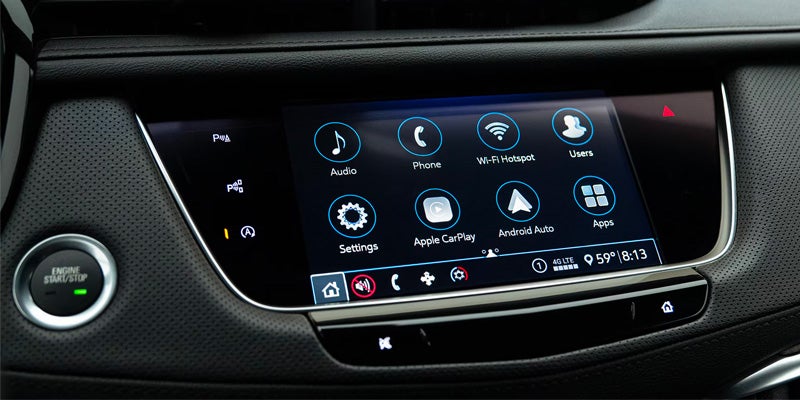
The car's center touchscreen displays icons for Audio, Phone, Wi Fi Hotspot, and Apple CarPlay.

Cadillac Screen And Display Issues When It Is Software Vs Hardware

Cadillac design continues to move forward by integrating digital systems that feel as intentional as the physical controls they replace. The display inside a Cadillac is not just a screen. It is the central interface that connects navigation, communication, vehicle settings, and driver awareness into one cohesive system. When that system does not respond as expected, the uncertainty is not just about the screen itself. It is about understanding whether the issue is temporary, system based, or something that requires deeper service. Knowing how these systems function creates clarity, allowing drivers to respond with confidence instead of guesswork. How Cadillac Infotainment Systems Work Behind The Screen Many drivers ask why their Cadillac screen stops working, but that question begins with how the system is built. A Cadillac infotainment system operates as a network of hardware and software components working together to process input, display information, and respond to commands. In a vehicle like the Cadillac Escalade, the display is only one part of the system. Behind it, a control module processes data, manages inputs from touch and physical controls, and communicates with other vehicle systems. The system relies on continuous communication between components. Software manages how information is displayed and how inputs are interpreted Control modules process commands and distribute data across systems The display presents output based on real time system activity This structure means that a visible issue on the screen is often the result of something happening deeper within the system. For drivers, understanding this relationship helps explain why a screen issue is not always caused by the display itself. What Causes Screen And Display Issues In Cadillac Vehicles When a display becomes unresponsive, goes black, or freezes, drivers often assume the screen has failed. In reality, issues can originate from several different points within the system. In Cadillac vehicles, these issues typically fall into two categories. Software related interruptions and hardware related failures. Software issues occur when the system temporarily loses the ability to process or display information correctly. This can happen due to system overload, background processes, or communication delays between modules. Hardware issues occur when a physical component within the system is not functioning properly. This may involve the display itself, wiring connections, or internal modules. Software interruptions can cause freezing, lag, or temporary black screens Hardware failures can result in persistent display loss or unresponsive inputs Environmental factors such as temperature can influence system behavior This distinction matters because it determines whether the issue is temporary or requires service. How To Tell If The Issue Is Software Or Hardware Drivers often want to know whether a screen issue is something they can resolve or something that requires professional attention. The difference between software and hardware issues can often be identified through patterns in how the system behaves. A software related issue is typically inconsistent. The system may freeze temporarily, restart, or return to normal function after a short period. These issues are often linked to processing delays or system conflicts. A hardware related issue is usually persistent. The screen may remain black, inputs may not respond at all, or the system may fail to recover after restarting. Intermittent issues often indicate software behavior Persistent issues suggest hardware involvement System recovery after restart points toward software rather than physical failure For drivers, recognizing these patterns helps determine the next step without unnecessary uncertainty. When A Reset Or Software Update Can Fix The Problem Many drivers ask how to reset their Cadillac infotainment system and whether that will resolve the issue. A reset reboots the system, clearing temporary errors and allowing software processes to restart cleanly. In vehicles like the Cadillac Escalade, a reset can resolve issues caused by system overload or temporary communication failures. Software updates can also improve system stability by addressing known issues and refining how the system operates. A reset clears temporary system conflicts Software updates improve performance and fix known issues Both solutions address software level problems rather than physical failures These actions are effective when the issue is related to how the system is processing information rather than a failure of the hardware itself. For drivers, this means that not every issue requires service. Some can be resolved through simple system management. When Service Is Required And What To Expect There are situations where a screen issue goes beyond what a reset or update can resolve. When the system does not recover, remains unresponsive, or shows consistent failure patterns, service is required to diagnose the underlying cause. In Cadillac vehicles, this involves evaluating the system at a component level. Technicians use diagnostic tools to identify whether the issue originates from the display, control module, or supporting hardware. Persistent black screens may indicate display or module failure Lack of response to input suggests deeper system issues Diagnostic evaluation determines the exact source of the problem Understanding when to seek service helps prevent unnecessary delays and ensures the system is restored correctly. For drivers, this creates a clear path forward. Instead of guessing, the decision becomes based on how the system behaves and what that behavior indicates about the underlying issue.

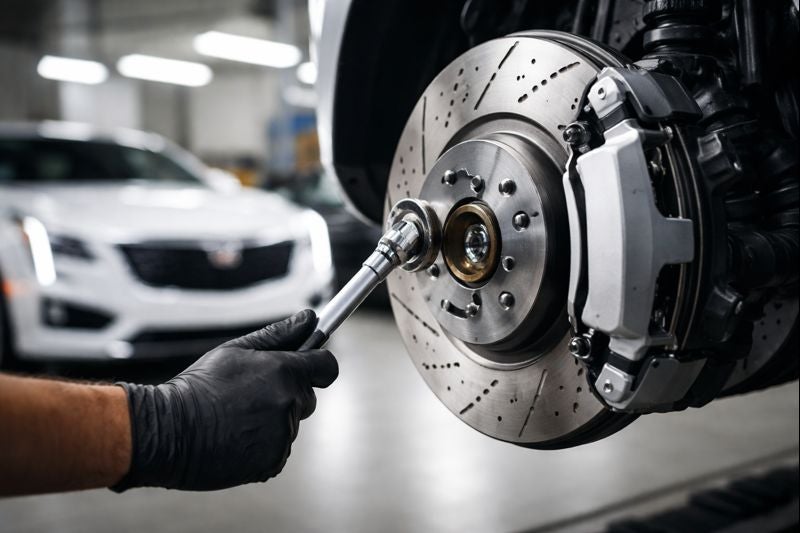
A gloved hand uses a socket wrench on a car brake rotor with a white Cadillac in the background.

Cadillac Brake Service Guide: When to Replace Brakes and Signs Luxury Vehicles Should Not Ignore

Brake systems in modern Cadillacs are engineered for precise control, consistent pedal feel, and confident stopping power under a wide range of driving conditions. Unlike basic braking systems, Cadillac brake components operate within tighter tolerances and rely on integrated electronic monitoring. Understanding how these systems wear, how warning signs present themselves, and why timing matters is essential to maintaining safety and performance. This guide explains how Cadillac brake systems function, what causes wear, and how to recognize when service is required before damage or safety risks escalate. How Cadillac Brake Systems Work At a system level, braking involves more than pads pressing against rotors. Cadillac brake systems are designed to balance stopping power, heat management, and smooth operation while working in coordination with traction control, stability systems, and driver assistance features. Key components include: Brake pads that create friction to slow the vehicle Brake rotors that absorb and dissipate heat Calipers that apply even pressure to the pads Brake fluid that transfers force from the pedal to the brakes Electronic sensors that monitor wear and system behavior Because these components work together, wear or failure in one area often affects the entire system. When Brake Pads Typically Need Replacement Brake pad lifespan varies significantly depending on driving habits, vehicle weight, and road conditions. In Cadillac vehicles, pads may last anywhere from moderate to extended mileage ranges, but mileage alone is not a reliable indicator. Frequent city driving, aggressive braking, and repeated short trips increase pad wear due to constant heat cycling. Highway driving and smooth braking habits generally extend pad life. Rather than relying on mileage, Cadillac owners should focus on system feedback and inspection results. Warning Signs That Indicate Brake Service Is Needed Brake systems often provide early indicators before performance is compromised. Recognizing these signs early helps prevent rotor damage and loss of braking efficiency. Common signs include: Squealing noises caused by wear indicators contacting the rotor Grinding sounds indicating pads are fully worn and metal contact has begun A soft or spongy brake pedal suggesting fluid or hydraulic issues Vibration or pulsation felt through the pedal during braking Increased stopping distance under normal driving conditions Electronic brake wear sensors may also trigger dashboard alerts when pad material reaches a critical threshold. Brake Warning Lights and Electronic Monitoring Modern Cadillacs use electronic monitoring to track brake wear and system health. A brake warning light does not always indicate immediate failure, but it should never be ignored. Dashboard alerts may indicate: Low brake pad material Brake fluid level concerns Electronic parking brake system issues System communication faults affecting stability or traction control Because braking systems interact with multiple safety systems, unresolved alerts can reduce overall vehicle safety even if basic braking still feels normal. Rotor Wear and Why It Matters Rotors play a critical role in heat management. When brake pads wear beyond their service limit, they can score or overheat rotors. Damaged rotors reduce braking efficiency and can introduce vibration or noise even after new pads are installed. In luxury vehicles like Cadillac, rotor replacement or resurfacing is often recommended when: Rotors fall below minimum thickness Heat spots or warping are present Pad wear has caused uneven rotor surfaces Replacing pads without addressing rotor condition can compromise braking performance and shorten the lifespan of new components. Brake Fluid and Hydraulic System Health Brake fluid is often overlooked, but it is essential to braking performance. Over time, brake fluid absorbs moisture, which reduces its ability to withstand heat and maintain consistent pressure. Degraded brake fluid can lead to: Reduced braking response during repeated stops Increased pedal travel Internal corrosion within brake components Periodic brake fluid inspection and service help maintain consistent pedal feel and prevent long term system damage. Why Luxury Vehicles Require Timely Brake Service Cadillac brake systems are designed to deliver smooth, controlled stopping rather than abrupt engagement. This refinement depends on precise component interaction. Delaying brake service can result in: Accelerated rotor damage Increased repair scope Reduced effectiveness of electronic safety systems Compromised braking consistency during emergency situations Addressing brake wear early preserves system integrity and supports the performance Cadillac vehicles are engineered to deliver. Driving Habits That Affect Brake Wear Brake wear is heavily influenced by how the vehicle is driven. Factors that accelerate wear include: Frequent stop and go traffic Aggressive braking habits Carrying heavy loads Driving in hilly or mountainous areas Adopting smoother braking techniques and allowing more following distance can extend brake component life and improve overall driving comfort. Final Perspective Brake systems are one of the most critical safety components in any Cadillac. Because these systems operate as a coordinated network rather than isolated parts, timely inspection and service are essential. Listening to warning signs, responding to alerts, and understanding how braking components wear helps owners maintain safety, performance, and long term reliability. Staying proactive with brake service ensures Cadillac vehicles continue to deliver confident, controlled braking in every driving situation.

Contact Us

Fill out this form below and we'll contact you shortly
*Required Fields