


Every Cadillac is built with precision, where engineering, comfort, and control are designed to work together seamlessly. That same level of intention extends into warranty coverage, but understanding what that coverage actually means requires more than reviewing a list of terms. Many drivers assume warranty protection is broad and automatic, yet the reality is more structured. Cadillac warranty coverage is built around how vehicle systems function, how components are expected to wear, and how responsibility is divided between manufacturer and owner. When those distinctions are clear, ownership becomes more predictable and easier to navigate over time.
How Cadillac Warranty Coverage Is Structured Across Vehicle Systems
Many drivers begin by asking what Cadillac warranty coverage actually includes. Cadillac warranty coverage is structured around defects in materials or workmanship, meaning it protects systems that fail due to how they were built rather than how they are used.
In a vehicle like the Cadillac Escalade, this structure applies across multiple systems, including electrical components, infotainment systems, drivetrain elements, and interior features. Each of these systems is expected to perform within a defined range under normal conditions.
Warranty coverage works by identifying whether a failure is caused by a defect or by external factors such as usage, environment, or time. This distinction is critical because it determines whether a repair is covered.
- Covered systems include components that fail unexpectedly due to manufacturing issues
- Evaluation focuses on how the component failed, not just that it failed
- Coverage is limited by time and mileage thresholds
This structure ensures that the vehicle performs as intended during the early stages of ownership. For drivers, it means the warranty is designed to support reliability, not replace routine maintenance or long term wear.
What Bumper To Bumper Warranty Actually Covers In Real Terms
Drivers often hear the term bumper to bumper warranty and assume it covers everything on the vehicle. A bumper to bumper warranty covers most vehicle systems between the front and rear of the vehicle, but only when failures are caused by defects in materials or workmanship.
In models like the Cadillac XT5, this includes systems such as electronics, interior controls, display systems, and many mechanical components. However, coverage is still tied to how those components fail.
The phrase bumper to bumper describes the scope of systems included, not the type of issues covered.
- Electronic systems are covered when they fail unexpectedly
- Interior components are covered when defects affect function
- Mechanical systems are covered when performance issues are linked to manufacturing
This means that even within bumper to bumper coverage, the cause of the issue must meet specific criteria.
For drivers, this clarifies that coverage is comprehensive in scope, but conditional in application.
What Cadillac Warranty Does Not Cover And Why Those Exclusions Exist
A common question is whether items like tires are covered under Cadillac warranty. Tires are not covered under standard warranty because they are considered wear items, meaning they are designed to change as part of normal driving.
Wear items include components that experience friction, pressure, or environmental exposure during use. These components are expected to degrade over time, even when functioning properly.
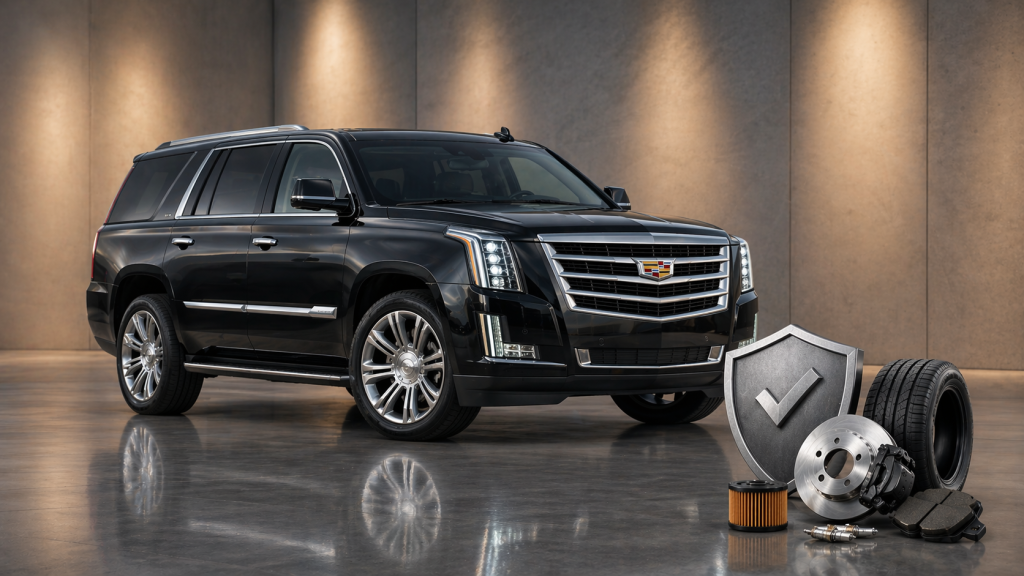
In a vehicle like the Cadillac Escalade, this includes brake pads, tires, filters, and fluids. These items are not excluded arbitrarily. They are excluded because their wear is predictable and necessary for the vehicle to operate.
- Tires wear as they maintain traction with the road
- Brake pads wear as they create friction to stop the vehicle
- Fluids degrade as they absorb heat and contaminants
Warranty coverage does not apply to these components because their change is part of normal operation, not a defect.
For drivers, understanding this distinction removes confusion and sets realistic expectations for ownership costs.
How Extended Warranty Changes Coverage And Risk
Many drivers consider extended warranty options and question what additional coverage actually provides. An extended warranty expands coverage beyond the original time and mileage limits, offering continued protection for certain systems after factory coverage ends.
In a vehicle like the Cadillac Escalade, extended coverage becomes relevant as the vehicle moves into later stages of ownership. At this point, the likelihood of system wear and component fatigue increases.
Extended warranty shifts the balance of risk by covering certain repairs that would otherwise be the owner’s responsibility.
- Coverage extends protection for key systems beyond factory limits
- Additional protection reduces exposure to unexpected repair costs
- Coverage terms vary based on plan selection and vehicle usage
This does not eliminate all maintenance costs, but it changes how those costs are distributed over time.
For drivers, extended coverage provides a way to maintain consistency in ownership experience as the vehicle ages.
How To Evaluate Warranty Coverage Based On Ownership Plans
Choosing whether warranty coverage is sufficient or whether extended protection is needed depends on how the vehicle will be used over time.
Drivers who plan to keep their Cadillac for a shorter period may find that factory coverage aligns closely with their ownership timeline. Those who plan to keep the vehicle longer or drive higher mileage may face increased exposure to repair costs once coverage ends.
- Consider how long you plan to own the vehicle
- Evaluate how many miles you typically drive each year
- Think about your preference for predictable costs versus variable repair expenses
Warranty coverage is not just about protection. It is about aligning the structure of that protection with your ownership patterns.
For drivers, this decision becomes clearer when viewed through the lens of how the vehicle will actually be used rather than relying on general assumptions about coverage.
Connect with us