


Wheel alignment is not just a tire service. In a Cadillac, it is a calibration of suspension geometry, steering input, and chassis balance. Modern Cadillac vehicles use advanced suspension systems, electronic stability controls, and in many models Magnetic Ride Control. When alignment angles shift, those systems cannot perform at their intended precision.
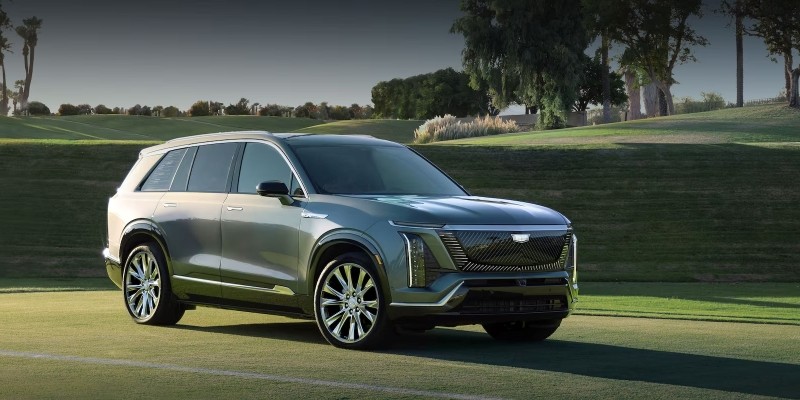
Understanding what alignment actually adjusts and why it matters helps protect ride quality, tire life, and long-term handling integrity.
What Wheel Alignment Actually Adjusts
A four-wheel alignment measures and corrects three primary angles: camber, caster, and toe. These are not cosmetic settings. They define how your tires meet the road.
Camber
Camber refers to the inward or outward tilt of the tire when viewed from the front of the vehicle.
- Negative camber means the top of the tire leans inward.
- Positive camber means it leans outward.
Improper camber causes uneven tire wear on the inner or outer edges and can reduce straight-line stability.
Caster
Caster is the forward or rearward tilt of the steering axis when viewed from the side.
- Proper caster supports steering stability at highway speeds.
- Uneven caster side-to-side can cause the vehicle to pull.
Toe
Toe measures whether the front edges of the tires point slightly inward or outward when viewed from above.
- Incorrect toe is the most common cause of rapid tire wear.
- Even small deviations can significantly shorten tire lifespan.
Luxury SUVs and sedans often run tighter alignment tolerances than standard vehicles because suspension geometry is tuned for ride isolation and steering precision.
Signs Your Cadillac May Need an Alignment
Owners often search for alignment after noticing one or more of the following:
- Vehicle pulls to one side on a straight road
- Steering wheel is off-center when driving straight
- Uneven or feathered tire wear
- Vibration at highway speeds
- Reduced steering responsiveness
If your Cadillac begins requiring constant steering correction, alignment angles may have shifted.
Why Luxury Vehicles Require More Precision
Cadillac suspension systems are engineered for balance between comfort and control. Models equipped with Magnetic Ride Control use electronically controlled dampers that adjust in milliseconds based on road input.
If wheel angles are misaligned:
- Steering sensors and stability systems compensate unnecessarily
- Dampers respond to uneven load distribution
- Ride comfort and handling precision decline
Misalignment places added stress on suspension bushings, control arms, and steering components.
Vehicles with larger wheels and low-profile tires are also more sensitive to alignment deviation. Luxury SUVs frequently use 20-inch or larger wheel packages. With less sidewall cushioning, suspension geometry becomes even more critical.
How Potholes and Road Conditions Affect Alignment
One of the most common causes of misalignment is impact damage.
Hitting:
- Deep potholes
- Curbs
- Road debris
- Uneven pavement edges
can shift suspension components slightly out of specification. Even small impacts can alter toe settings.
Because Cadillacs use sophisticated independent suspension setups, even minor shifts in geometry can affect ride feel.
Four-Wheel Alignment vs Front-End Alignment
Modern Cadillac models require four-wheel alignment, not just front-end correction.
Four-wheel alignment:
- Measures rear suspension angles
- Ensures thrust angle is correct
- Aligns all four wheels relative to vehicle centerline
If the rear suspension is not aligned properly, the vehicle may track slightly sideways even if the front wheels appear straight.
Full-size SUVs such as the Cadillac Escalade use independent rear suspension in recent generations. This makes rear alignment adjustment even more critical for straight-line stability.
All-Wheel Drive and Alignment Considerations
Cadillac models equipped with all-wheel drive distribute torque between front and rear axles. When alignment angles are incorrect:
- Driveline components may experience uneven stress
- Electronic traction systems may compensate unnecessarily
- Tire wear may accelerate across all four corners
Maintaining correct alignment ensures balanced load across the drivetrain.
How Often Should Alignment Be Performed?
There is no single mileage interval that guarantees alignment will stay within specification. However, common recommendations include:
- After replacing tires
- After suspension repairs
- After significant pothole impact
- When uneven tire wear appears
- During annual maintenance inspections
Some owners choose to have alignment checked annually, particularly in regions with rough road conditions.
Can Misalignment Ruin Tires?
Yes.
Incorrect toe or camber can destroy a set of tires in a relatively short distance. Uneven wear patterns such as:
- Inner edge wear
- Outer edge wear
- Feathering
- Cupping
reduce tire lifespan and increase road noise.
Given the cost of premium tire sets on luxury SUVs, maintaining alignment protects long-term ownership cost.
Alignment and Ride Quality Preservation
Cadillac vehicles are engineered for quiet composure. Proper alignment supports:
- Even tire contact patch
- Straight tracking at highway speeds
- Balanced steering input
- Consistent braking stability
Over time, even minor deviations reduce the vehicle’s refined driving character.
Wheel alignment is not only about preventing pull. It is about preserving the precision engineered into the suspension system.
How Long Does an Alignment Take?
A professional four-wheel alignment typically takes about one hour. The process includes:
- Mounting sensors on all four wheels
- Measuring camber, caster, and toe
- Adjusting suspension components
- Verifying final calibration
Modern digital alignment systems measure angles within fractions of a degree.
Final Perspective
Cadillac vehicles are designed around intentional geometry. Steering feel, suspension response, and ride comfort all depend on precise wheel alignment.
If you notice pulling, uneven tire wear, or a change in steering behavior, alignment inspection is one of the most effective ways to restore factory-calibrated handling.
Maintaining alignment is not optional maintenance for a luxury vehicle. It is part of preserving the signature balance between comfort and control that defines Cadillac engineering.
Connect with us