


For more than a century, Cadillac has shaped the idea of what an SUV can be by pairing presence with purpose. Today, that vision extends in two distinct directions. The Cadillac Escalade continues with a V8 engine rooted in combustion, while the Escalade IQ introduces a fully electric platform built around battery powered motion. Many drivers are not simply comparing specifications. They are trying to understand how these two systems change the experience of ownership, from how power is delivered to how daily routines are shaped. The difference between electric and V8 Escalade models is not just mechanical. It defines how the vehicle fits into your life over time.
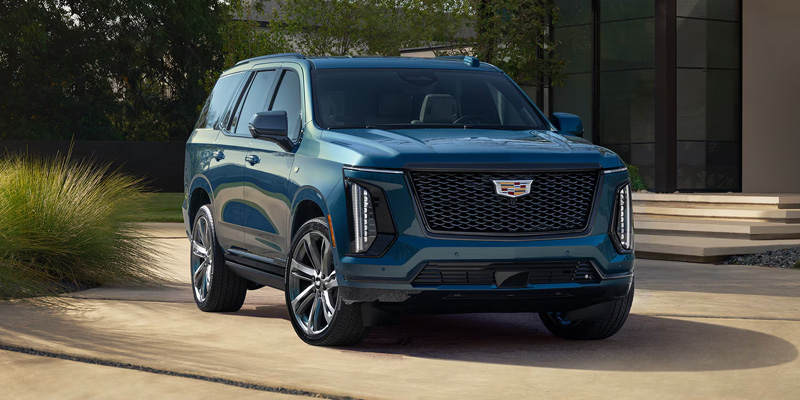
How Escalade IQ, Escalade, And Escalade ESV Actually Differ
Many drivers ask whether the Escalade IQ is the same as the Escalade ESV, especially since both names sit within the same lineup. The Escalade IQ is a fully electric SUV built on a battery powered platform, while the Escalade and Escalade ESV are gas powered SUVs that differ primarily in size rather than how they are powered.
In the Escalade IQ, the vehicle is engineered around an electric architecture. Energy is stored in a large battery and delivered through electric motors, which changes how power is produced, how the vehicle accelerates, and how it is maintained over time.
In the standard Cadillac Escalade, a V8 engine generates power through combustion. This system delivers a familiar driving experience with consistent fueling behavior and established maintenance patterns.
The Escalade ESV builds on that same V8 system but extends the overall length of the vehicle. This added length increases rear passenger space and cargo capacity without changing how the vehicle is powered.
- Escalade IQ uses an electric powertrain with battery driven motors and charging based ownership
- Escalade uses a V8 engine with fuel based operation and traditional driving feel
- Escalade ESV uses the same V8 system but extends the body to increase interior space
This distinction matters because each model solves a different type of ownership need. The Escalade IQ changes how the vehicle operates at a system level, while the Escalade and Escalade ESV focus on space, capacity, and familiarity.
For a driver, understanding this difference helps avoid comparing models that are not direct equivalents. The Escalade IQ is a shift in how the vehicle is powered, while the Escalade ESV is a shift in how much space the vehicle provides.
How Electric And V8 Powertrains Actually Work In Escalade Models
Many drivers begin by asking what the difference is between the Escalade IQ and the gas powered Escalade. An electric powertrain uses stored electrical energy in a battery to power motors that drive the wheels, while a V8 powertrain uses combustion to generate energy through fuel ignition.
In the Escalade IQ, the battery stores energy that is delivered instantly to electric motors. This creates immediate torque, meaning acceleration happens smoothly and without delay. The system operates with fewer moving parts, relying on electronic control rather than mechanical combustion.
In the gas powered Escalade, the V8 engine burns fuel to create controlled explosions inside the engine. This process generates power that is transferred through the drivetrain to move the vehicle forward. The system builds power progressively as engine speed increases.
- Electric systems deliver immediate torque through motor driven output
- V8 systems generate power through combustion cycles and mechanical rotation
- Energy delivery in EVs is direct, while gas engines rely on staged power buildup
This difference matters because it shapes how the vehicle responds to input. The Escalade IQ feels smooth and immediate, while the V8 Escalade offers a familiar, progressive power delivery that many drivers recognize.
| Feature | Escalade IQ (Electric) | Escalade V8 (Gas) |
|---|---|---|
| Energy Source | Battery powered electric motors | Gasoline combustion engine |
| Power Delivery | Instant torque, smooth acceleration | Progressive power through engine RPM |
| Mechanical Complexity | Fewer moving parts | More mechanical components |
| Driving Feel | Quiet, immediate response | Familiar, responsive engine feel |
Escalade IQ Range Vs Escalade V8 Fuel Range In Real Driving
Another common question is how far the Escalade IQ can travel on a charge compared to how far a gas Escalade can go on a full tank. Range in an electric vehicle refers to how far the battery can power the vehicle before needing to recharge, while fuel range depends on tank size and fuel consumption.
In the Escalade IQ, range is influenced by battery capacity, driving conditions, and how efficiently energy is used. Factors such as speed, terrain, and climate can affect how far the vehicle travels on a single charge.
In the gas powered Escalade, range is determined by fuel tank capacity and miles per gallon. While driving conditions still play a role, refueling restores full range quickly.
- EV range varies based on driving behavior and environmental conditions
- Gas range remains more consistent but depends on fuel consumption rate
- Charging restores energy over time, while refueling is nearly immediate
This difference becomes more noticeable depending on how and where you drive. Daily commuting may align easily with electric range, while long distance travel may require more planning.
Charging Vs Fueling How Ownership Behavior Changes
Drivers often question whether charging is more difficult than fueling and how it affects daily routines. Charging an electric vehicle involves connecting the vehicle to a power source, while fueling involves refilling the tank at a gas station.
In the Escalade IQ, charging can happen at home or at public charging stations. Home charging allows the vehicle to recharge overnight, which changes the ownership experience by reducing the need for frequent stops.
In the gas powered Escalade, fueling requires visiting a gas station. The process is quick and familiar, but it must be repeated regularly based on fuel consumption.
- Charging can be integrated into daily routines through home charging
- Public charging requires planning depending on location and availability
- Fueling is fast and widely accessible but requires repeated stops
This shift in behavior is one of the most significant differences between electric and gas ownership. For some drivers, charging adds convenience. For others, fueling remains more practical depending on access and routine.
| Ownership Factor | Escalade IQ | Escalade V8 |
|---|---|---|
| Refueling Method | Charging at home or public stations | Gas stations |
| Time to Refill | Longer, varies by charger type | Fast and consistent |
| Daily Routine Impact | Can charge overnight with minimal disruption | Requires regular fuel stops |
| Long Distance Travel | Requires route and charging planning | More flexible and immediate |
Maintenance And Long Term Ownership Differences
Many drivers want to understand whether an electric Escalade is less expensive to maintain than a gas powered model. Maintenance differences come from how each system operates and what components are involved.
In the Escalade IQ, fewer moving parts reduce the number of components that experience wear. There is no engine oil, fewer fluids, and less mechanical friction. The system relies more on electronic control and battery management than traditional engine upkeep.
In the gas powered Escalade, the V8 engine includes more components that require regular service. Oil changes, filters, and engine maintenance are necessary to keep the system operating within its intended performance range.
- Electric systems reduce maintenance by eliminating combustion related components
- Gas systems require routine service to maintain engine performance
- Wear patterns differ based on mechanical complexity and usage
Over time, this difference can influence total ownership cost. While electric vehicles may reduce routine service needs, they introduce different considerations such as battery health and charging infrastructure.
How To Choose Based On Your Driving Patterns And Environment
Choosing between the Escalade IQ and the gas powered Escalade depends on how you drive, where you drive, and what you expect from your vehicle over time.
If your routine includes predictable daily driving, access to home charging, and a focus on efficiency, the Escalade IQ aligns with those needs through its electric design.
If your driving involves long distance travel, frequent trips, or reliance on quick refueling, the V8 Escalade provides a more familiar and flexible experience.
- Consider whether your daily driving fits within electric range limits
- Evaluate access to charging at home or in your area
- Think about how often you rely on long distance travel
The decision is not about which system is better in general. It is about which system supports your lifestyle with the least friction and the most confidence.
Connect with us