

Cadillac hybrid models played an important role in the brand's transition toward electric driving. Today, Cadillac offers fully electric vehicles alongside its gasoline-powered models, but no new hybrid in its 2026 U.S. lineup. That distinction matters when you're considering a vehicle that uses both gasoline and electricity.
Does a Cadillac hybrid need charging, and how is it different from a fully electric SUV? The answer comes from how each powertrain stores energy and moves the wheels. Understanding those differences can guide your next vehicle decision, from engine selection to charging access.
Cadillac Hybrid Models Past and Present
Cadillac previously offered several vehicles that combined gasoline engines with electric propulsion. However, those models are no longer part of the new 2026 U.S. vehicle lineup. Cadillac's current electrified choices use battery-electric powertrains without gasoline engines.
Three historical Cadillac models illustrate how the brand approached electrification:
- Cadillac Escalade Hybrid: Earlier Escalade Hybrid models combined a gasoline V8 with electric propulsion components. The hybrid equipment supported engine operation and fuel savings without requiring external charging.
- Cadillac ELR: The ELR used an externally rechargeable battery, electric drive motor, and gasoline-powered generator. Its extended-range architecture could supply electricity from gasoline after battery charge declined.
- Cadillac CT6 Plug-In Hybrid: This sedan combined a gasoline engine, electric motors, and rechargeable battery storage. It offered electric driving alongside gasoline propulsion.
These vehicles illustrate different stages of Cadillac's engineering history. The Escalade Hybrid used conventional hybrid technology, while the ELR and CT6 included external charging connections.
Therefore, shoppers researching a used Cadillac hybrid should identify the exact model and production year. Battery age, service history, and charging components also deserve review.
For new Cadillac shoppers, the current choice is different. The 2026 electrified lineup consists of fully electric vehicles with no gasoline engine. Cadillac has not listed a new plug-in hybrid among those offerings.
Hybrid, Plug-In Hybrid and Electric Powertrains
Hybrid, plug-in hybrid, and battery-electric vehicles all use electric motors. However, their energy sources and charging arrangements differ.
A conventional hybrid combines a gasoline engine with one or more electric motors. The battery stores energy recovered during braking and supplied through the engine's operation.
Consequently, conventional hybrids do not require connection to an external charger. The gasoline engine remains part of their normal operation.
A plug-in hybrid also combines an engine and electric propulsion. However, it has a battery that can receive electricity from an external charging source.
That larger battery supports electric driving before the gasoline engine takes a greater role. The distance available on electricity varies by vehicle and battery charge.
By contrast, a battery-electric vehicle relies entirely on stored electricity for propulsion. It uses electric motors instead of a gasoline engine and requires charging equipment to replenish its battery.
This distinction explains the current Cadillac lineup. Models such as the LYRIQ and OPTIQ do not switch to gasoline after the battery charge declines. Drivers must recharge their batteries to continue traveling.
For your next Cadillac, consider whether you want gasoline refueling or an electric charging routine. The two approaches require different preparation for commuting and longer trips.
Current Cadillac Electric Vehicle Options
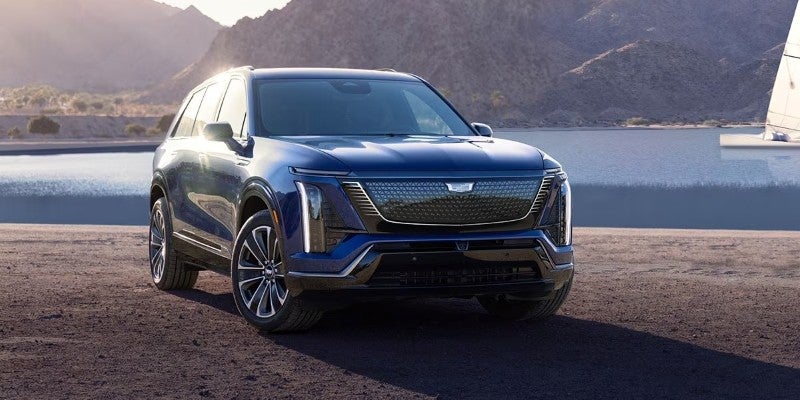
Cadillac's 2026 electric lineup spans compact SUVs, three-row models, full-size SUVs, and a handcrafted sedan. Each vehicle uses battery-electric propulsion, though cabin layouts and available equipment differ.
The current Cadillac electric families include:
- Cadillac OPTIQ: A compact electric SUV with two rows of seating. It provides a smaller SUV option within Cadillac's electric lineup.
- Cadillac LYRIQ: A midsize electric SUV with two rows. The lineup also includes the LYRIQ-V, which adds V-Series-specific engineering.
- Cadillac VISTIQ: A three-row electric SUV positioned between the LYRIQ and the larger Escalade electric models. It provides additional passenger seating.
- Cadillac Escalade IQ and IQL: Full-size electric SUVs with three-row configurations. The IQL offers an extended body for additional interior space.
- Cadillac CELESTIQ: A handcrafted electric sedan with a distinct design and personalized specification process.
The OPTIQ-V also extends Cadillac's V-Series approach into the electric SUV range. Its configuration differs from the standard OPTIQ.
None of these current electric models includes a gasoline engine. Therefore, shoppers should compare electric range, charging equipment, passenger space, and available drivetrain configurations.
A smaller SUV may suit parking and seating needs that differ from those of a full-size model. However, vehicle dimensions alone do not reveal the complete cabin layout.
Review the specifications for the model and trim you are considering. The available charging equipment and battery specifications can also differ between electric Cadillacs.
Electric Motors, Regenerative Braking and Battery Technology
Cadillac electric vehicles use battery energy to power electric motors that turn the wheels. The battery stores electrical energy, while power electronics manage its delivery to the motor.
When you press the accelerator, the motor converts electrical energy into rotational force. That force reaches the wheels through the vehicle's drive components.
Electric motors can produce torque without the gear changes associated with conventional multi-speed automatic transmissions. Therefore, electric propulsion creates a different acceleration response from a traditional gasoline drivetrain.
Cadillac EVs also use regenerative braking to recover some energy during deceleration. What happens when you slow down?
During regenerative braking, the electric motor operates as a generator. Wheel motion drives the motor, which converts some of the vehicle's kinetic energy into electricity.
The recovered electricity returns to the battery when the vehicle can accept it. However, energy recovery cannot replace external charging because some energy is lost during driving.
Battery management also plays a central role in electric propulsion. Electronic controls monitor battery temperature, electrical output, and charge levels.
Thermal management helps regulate battery temperatures during charging and driving. Moreover, vehicle software coordinates charging limits and energy delivery.
For shoppers, these components explain why charging speed and available driving range can change. Battery temperature, driving speed, accessory use, and charging equipment all contribute to the result.
Charging and Daily Driving Considerations
A fully electric Cadillac requires charging access, whether at home, work, or a public station. Understanding the charging methods can clarify the preparation needed before selecting an EV.
Charging equipment supplies electricity to the battery through a compatible connection. However, the vehicle's onboard charging hardware and battery management also regulate how much power it accepts.
Three charging approaches deserve consideration:
- Level 1 charging: This method uses a compatible standard 120-volt household connection. It supplies electricity at a relatively slow rate and may suit limited daily driving.
- Level 2 charging: This method uses higher-voltage AC electrical equipment. A properly installed home charger can replenish battery energy faster than Level 1.
- DC fast charging: Compatible public stations supply direct-current electricity to the vehicle. This method can add battery charge more quickly during travel stops.
Level 2 home charging may require electrical installation by a qualified professional. Therefore, review your home's electrical service and parking arrangement before selecting equipment.
Public charging also requires checking connector compatibility and station access. Charging networks, station output, and vehicle hardware can vary.
What will charging cost? The amount comes from electricity consumed and the price charged by your provider.
Home electricity rates differ from public charging prices. Some public stations also charge session or parking fees. Consequently, a single charging-cost estimate cannot apply to every location or trip.
Charging time varies as well. Battery charge level, temperature, charger power, and vehicle specifications all shape the time required.
Before purchasing, estimate your regular driving distance and identify reliable charging options. This makes electric vehicle planning more specific to your transportation needs.
Choosing a Cadillac Electric Vehicle
Selecting a Cadillac EV begins with how much passenger space you need and where you can charge. The compact OPTIQ, midsize LYRIQ, and three-row VISTIQ serve different cabin requirements.
For additional room, consider the Escalade IQ and extended Escalade IQL. The CELESTIQ provides a separate electric sedan option.
Next, examine the specific model's battery specifications, charging hardware, and available range estimates. Manufacturer estimates represent defined testing methods and should not be treated as guaranteed travel distances.
Also consider how your regular routes compare with the battery range and available charging stations. Drivers with home charging access may plan their schedules differently from those relying on public stations.
Cadillac's historical hybrid models remain relevant when researching pre-owned vehicles. However, new-vehicle shoppers should distinguish those discontinued configurations from today's fully electric offerings.
At Ross Downing Cadillac in Hammond, explore our Cadillac electric SUV lineup for additional model comparisons. You can also review our new Cadillac inventory to see available vehicles and equipment.
Your next Cadillac should match your seating requirements, travel plans, and preferred source of energy. Compare the verified specifications and charging options before making your selection. That research will give you a clearer basis for choosing between Cadillac's gasoline-powered and fully electric vehicles.