


Cadillac CT4 vs CT5
Explore Cadillac CT4 and CT5 Inventory
Call to Compare Cadillac Sedans
Schedule Your Cadillac Sedan Test Drive
| Sales | ||
| Day | Open | Closed |
| Monday | 8:30AM | 7:30PM |
| Tuesday | 8:30AM | 7:30PM |
| Wednesday | 8:30AM | 7:30PM |
| Thursday | 8:30AM | 7:30PM |
| Friday | 8:30AM | 7:30PM |
| Saturday | 9:00AM | 5:00PM |
| Sunday | Closed | Closed |
Choose Between the Cadillac CT4 and CT5 for Your Roads, Passengers, and Pace
A Cadillac CT4 vs CT5 decision starts with more than choosing a smaller or larger sedan. The better fit comes from how often rear passengers ride with you, how much trunk room your trips require, which engine path matches your preferred pace, and whether you value a tighter footprint or the CT5’s added cabin space. For travel through Hammond and across South Louisiana, those questions create a cleaner path than starting with color, wheels, or an upper model badge.
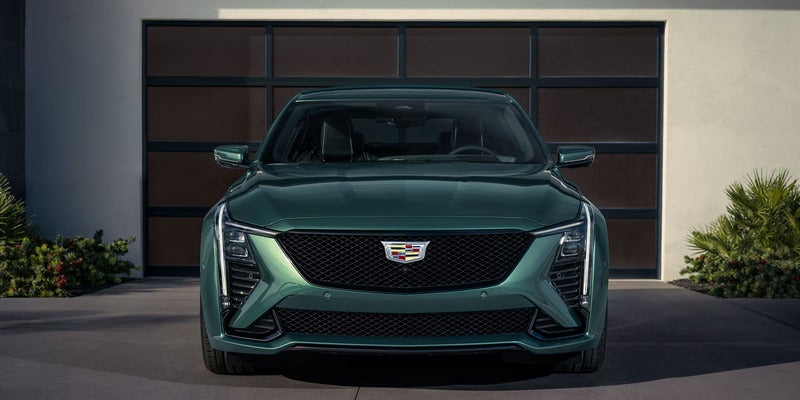
Start With Sedan Size Before You Compare Smaller Details
The CT4 and CT5 both provide four doors and seating for up to five, yet they occupy different physical spaces. The CT4 measures 187.2 inches long on a 109 inch wheelbase. The CT5 measures 193.8 inches long on a 116 inch wheelbase. That gives the CT5 another 6.6 inches of overall length and 7 inches between the axles.
Those figures shape the first decision.
Choose the CT4 path when a smaller exterior has clear value in the places you drive most. A shorter sedan can be easier to place in tighter parking areas, smaller garages, crowded lots, and routes where exterior size stays present in your mind. A shopper who spends most weeks alone or with one front passenger may place that compact format high on the list.
The CT5 path deserves stronger attention when cabin room and a larger sedan presence rank higher. Added length does not settle the choice by itself, yet it creates more space for rear passengers and gives the car a different proportion on the road.
The tension sits between exterior size and interior room. Do not choose the CT4 solely because smaller sounds sportier. Do not choose the CT5 solely because larger sounds more substantial. Start with the places the car must fit and the people it must carry.
Once that question is settled, engine, cabin equipment, and V Series research become far easier to sort.
Compare Rear Seat and Trunk Fit With the People and Cargo You Carry
Interior space creates one of the clearest differences between the CT4 and CT5. Both list 42.4 inches of front legroom, so the sharper separation appears behind the front seats. The CT4 provides 33.4 inches of rear legroom. The CT5 provides 37.9 inches.
A 4.5 inch gap deserves more than a quick glance at a specification chart.
If adults ride in back several times each week, place the front seats where the regular front occupants need them and then sit in the rear row. Check knee space, foot placement, door access, and how the cabin feels after ten minutes rather than ten seconds. A household with growing children should think beyond current height. A child seat can also change front seat placement, so bring the actual seat when fit is central to the purchase.
Use a few direct checks before deciding:
- Set both front seats for the people who will use them most.
- Sit in the rear row with those front seat positions unchanged.
- Check child seat placement if one is part of the plan.
- Load the bags, golf gear, stroller, or work cases you carry regularly.
- Confirm whether rear seat use and trunk space must work at the same time.
Cargo adds another difference. The CT4 lists 10.7 cubic feet of trunk volume, while the CT5 lists 11.9 cubic feet. The numerical gap is smaller than the rear legroom gap, which makes trunk shape and your own gear worth checking.
Bring recurring items when possible. Golf bags, carry on luggage, work cases, a folded stroller, sports equipment, and weekly purchases reveal more than an abstract volume figure.
The tradeoff is direct. The CT4 asks less exterior space from your garage and parking routine. The CT5 gives rear passengers more room and adds some trunk volume. A driver who rarely fills the second row may see little reason to move up in size. Someone carrying adults, older children, or frequent travel bags may place the CT5 higher after one proper fit check.
Compare Standard Engine Paths After You Settle the Size Question
The standard CT4 and CT5 share a notable starting point. Each offers a 2.0L turbocharged four cylinder rated at 237 horsepower and 258 lb ft of torque with premium gasoline. Shared output can make the two sedans look more alike on paper than they feel as complete vehicles.
That is why size should come first.
In the CT4, the 2.0L engine sits inside the smaller sedan format. A shopper may value that combination when compact dimensions and regular commuting matter more than moving into a larger body. The CT4 also opens another standard model route through an available 2.7L turbocharged four cylinder with 310 horsepower and 350 lb ft of torque.
The CT5 takes a different path. Its standard 2.0L engine sits inside the larger sedan body, so the same horsepower and torque figures serve a car with more length, more wheelbase, and more rear passenger room. The purchase question therefore cannot be reduced to engine output.
Start by asking what you want the engine to support.
If the smaller CT4 footprint is the priority, compare the 2.0L path against the available 2.7L route before moving elsewhere. If the larger CT5 cabin is the priority, evaluate the standard engine inside that broader package and then review the exact CT5 range available.
There is also a budget tension. Money placed into added output cannot be placed into every cabin option, wheel choice, or other equipment item at the same time. The highest horsepower figure is not automatically the strongest answer.
Drive the exact configurations under consideration. Compare low speed response, highway merging, passing, transmission action, cabin sound, and how each car fits the roads you travel most.
Decide What the Extra Exterior Size Changes for Your Regular Routes
The CT4 and CT5 create different spatial demands before either car moves an inch. The CT4 is 187.2 inches long. The CT5 is 193.8 inches long. Their wheelbases measure 109 inches and 116 inches respectively.
For a shopper with a tight garage, assigned parking spot, narrow driveway, or frequent urban parking, those numbers deserve a tape measure. Check the space rather than relying on memory. Include room for walking around the car, opening doors, accessing storage, and closing a garage door.
Road placement deserves its own review. A smaller sedan can feel easier to position when lanes narrow, traffic compresses, or parking structures leave little extra room. The larger CT5 asks for more physical space while returning more rear passenger room and a broader cabin.
Long highway travel can move the priorities again. A driver who spends hours with rear passengers may place the CT5’s added second row room above the CT4’s smaller exterior. A solo commuter moving through crowded parking areas may reach the opposite conclusion.
This is a true tradeoff, not a ranking.
Use your regular routes as the test. Think about the parking lot you enter each morning, the garage you use every night, the passengers who join you most weeks, and the longest trip you repeat several times each year. The sedan that fits those repeated tasks deserves priority over the one that wins a single specification category.
Compare Cabin Technology by the Features You Will Touch Most
Cabin technology creates another separation point, and the strongest comparison begins with repeated use.
The CT5 places major emphasis on its 33 inch Horizon Display, Google built in, available Super Cruise, AKG audio, available ventilated and massaging front seats, surround view camera equipment, and added driver assistance features. That gives the larger sedan a distinct cabin direction that should be evaluated in person.
The CT4 follows a different scale and presentation. A shopper drawn to the smaller sedan may care more about keeping the car compact while securing the phone integration, charging, audio, camera, seat, and driver assistance equipment that matters most.
Do not compare by counting features.
Sit in each car and complete the tasks you repeat every week. Pair a phone. Enter a destination. Adjust the seat. Move through climate controls. Check camera views. Place the device you carry on the charging area. Look at the display from your normal seating position.
The tension lies between added cabin hardware and the vehicle format you prefer. A larger display or additional seat feature may matter greatly to one shopper and very little to another. The CT5 deserves a closer look when its cabin presentation and added technology sit near the top of your priorities. The CT4 can remain the stronger fit when a smaller sedan comes first and the selected equipment already covers what you use.
Know When Standard Sedan Research Should Move Into V Series
CT4 versus CT5 research can change direction once V Series enters the conversation. At that point, do not treat the upper models as simple trim upgrades.
The standard sedan comparison asks about size, passenger room, engine path, cabin technology, and recurring travel. V Series adds a more focused mechanical question.
CT4 V uses a 2.7L turbocharged four cylinder with 325 horsepower and 380 lb ft of torque. CT5 V moves to a 3.0L twin turbocharged V6 with 360 horsepower and 405 lb ft of torque. Those are distinct engine paths before Blackwing models are considered.
Blackwing moves farther. CT4 V Blackwing uses a 3.6L twin turbocharged V6 with 472 horsepower and 445 lb ft of torque. CT5 V Blackwing uses a hand built supercharged 6.2L V8 with 668 horsepower and 659 lb ft of torque.
Move into V Series research when these priorities rise to the top:
- stronger output is central to the purchase
- added braking hardware matters
- more focused chassis hardware is a priority
- the standard sedan range no longer fits the response you want
- you are ready to compare size and mechanical direction together
First decide whether CT4 or CT5 size fits your passenger and road needs. Then ask whether the standard model range provides the engine and cabin direction you want. Move into V Series only when stronger output, added braking hardware, and more focused chassis equipment become central to the purchase.
Blackwing deserves a separate check again. The output gap is large, but size remains relevant. A shopper drawn to the smaller CT4 V Blackwing is making a different spatial choice than someone considering the larger CT5 V Blackwing.
Keep the hierarchy clear. More power does not erase passenger needs, parking limits, trunk requirements, or preferred exterior size. The strongest sedan is the one whose full configuration fits the way you plan to use it.
Build a Cadillac Sedan Shortlist From Hammond
Ross Downing Cadillac in Hammond gives shoppers across South Louisiana a local path from comparison research into exact CT4 and CT5 inventory. Before opening listings, write down the sedan size, rear seat needs, trunk requirements, engine direction, cabin equipment, and V Series interest that survived your review.
Then compare a small group of cars against the same list. Verify engine, drivetrain, installed equipment, seating features, display technology, and exact model designation on each vehicle.
A focused short list keeps an appealing color or wheel design from replacing the reasoning behind your choice. The goal is a Cadillac sedan that fits your roads, passengers, cargo, preferred pace, and the details you will notice every week.
Is the Cadillac CT4 a good daily driver?
The CT4 can fit regular commuting well when its smaller footprint, rear seat room, trunk size, and chosen configuration match your routine. Check the parking areas you use most, how frequently rear passengers ride with you, how much highway travel you cover, and which cargo items come along each week. A solo commuter may reach a different conclusion than a household using the rear row several times each week.
How can you make the trunk space of a Cadillac CT5 a little larger?
Start by checking whether the exact CT5 has folding rear seatbacks and how they open into the cabin. Soft sided luggage can use irregular spaces more easily than rigid cases, while loading larger flat items first may leave smaller pockets for bags. Measure recurring cargo before purchase, and confirm that rear seat folding still leaves the passenger space you need for the same trip.
What platform is the Cadillac CT5 built on?
The Cadillac CT5 uses GM’s Alpha 2 rear wheel drive vehicle architecture. That foundation supports the sedan’s longitudinal engine layout and rear drive configuration, with AWD available on selected models. Platform name alone should not settle a purchase, since engine, drivetrain, suspension hardware, wheel and tire choice, and model designation can change how two CT5 configurations feel on the road.
How do the Cadillac CT4 V Blackwing and CT5 V Blackwing compare in size?
The CT4 V Blackwing is the smaller sedan, while the CT5 V Blackwing uses a longer body and wheelbase. Compare more than garage fit. Check rear passenger room, front seating position, trunk needs, door access, and how much exterior size you want to place on the road. The stronger choice starts with the cabin and dimensions you can live with before output enters the decision.
(Note: Vehicle dimensions, engines, drivetrains, equipment, ratings, and availability vary by model and individual vehicle. Review exact vehicle information and manufacturer documentation before making a purchase decision.)