


Cadillac’s transition to electric vehicles is not simply a change in propulsion. It is a complete redesign of how vehicles are structured, how they deliver power, and how they support different driving needs. Many shoppers researching the Cadillac EV lineup are trying to understand which model fits their lifestyle and how electric vehicles change ownership compared to a gasoline SUV.
The confusion comes from how the lineup is often presented. Cadillac OPTIQ, Cadillac LYRIQ, Cadillac VISTIQ, and Cadillac Escalade IQ are frequently positioned as a size progression. In reality, each model is engineered around a specific ownership use case. The differences come from battery capacity, charging behavior, weight distribution, and passenger packaging, not just exterior dimensions.
How Cadillac EV Architecture Changes Cabin Space and Driving Behavior
Many shoppers researching Cadillac EVs ask what the Ultium platform is and how it actually changes the vehicle. A dedicated EV platform is a vehicle architecture that integrates the battery into the floor structure, eliminating the need for a traditional engine layout and central driveline components.
The Cadillac LYRIQ battery layout creates a flat floor structure, which increases rear passenger legroom and allows for a more open cabin design. Without a center tunnel, rear seating positions are more natural, especially during longer trips.
The Cadillac OPTIQ platform uses the same underfloor battery design within a smaller footprint. While interior space is more compact than Cadillac LYRIQ, the packaging remains more efficient than a comparable gasoline SUV because the structure is not constrained by engine components.
The Cadillac VISTIQ three row configuration extends this architecture further. By lengthening the wheelbase while maintaining the underfloor battery, Cadillac VISTIQ supports usable third row seating without forcing a higher ride height. This allows families to gain passenger capacity without sacrificing overall balance or comfort.
This architecture also changes how the vehicle behaves in motion. Because the battery sits low in the chassis, Cadillac EVs benefit from:
• reduced body roll during cornering
• more stable highway driving due to a lower center of gravity
• smoother braking transitions because weight transfer is more controlled
For drivers transitioning from gasoline SUVs, this results in a more planted and predictable driving experience, especially at highway speeds.
How OPTIQ and LYRIQ Differ in Daily Driving and Range Behavior
Many shoppers comparing Cadillac OPTIQ vs Cadillac LYRIQ want to understand which one is better for everyday use. The key difference is how each vehicle is engineered to manage energy and driving conditions.
The Cadillac OPTIQ battery system is optimized for efficiency in shorter, more frequent trips. Its lighter weight allows it to recover energy more effectively through regenerative braking, which is most active in stop and go driving.
The Cadillac LYRIQ battery system is designed for broader use, including sustained highway driving. A larger battery capacity allows Cadillac LYRIQ to maintain range more consistently at higher speeds, where energy consumption is more continuous.
From a mechanical standpoint, these differences show up in real driving scenarios:
• Cadillac OPTIQ requires less energy to accelerate due to lower mass, making it more efficient in urban environments
• Cadillac LYRIQ maintains momentum more effectively at highway speeds due to its size and battery capacity
• Cadillac LYRIQ will typically require fewer charging stops on longer trips, while Cadillac OPTIQ prioritizes efficiency within daily driving cycles
This means Cadillac OPTIQ is best suited for drivers with predictable daily routines, while Cadillac LYRIQ is better aligned with mixed driving that includes longer distances.
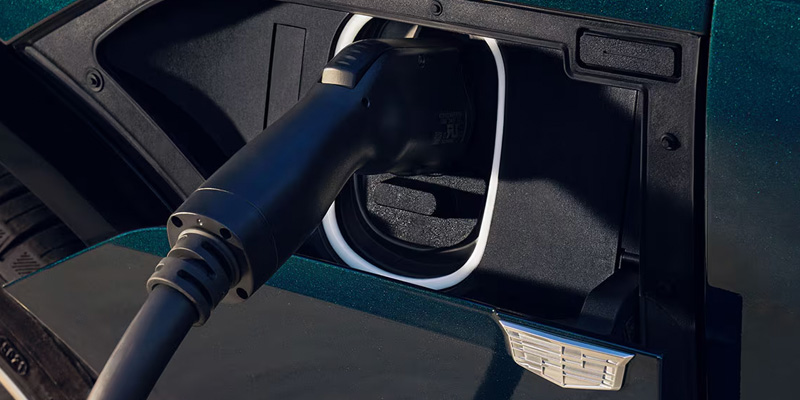
How Cadillac EV Charging Actually Works in Real Use
Many drivers ask how long it takes to charge a Cadillac EV and whether charging is inconvenient. DC fast charging is a high power charging method that delivers direct current to the battery, allowing rapid energy transfer compared to home charging systems.
The Cadillac LYRIQ charging system operates on a charge curve rather than a constant rate. Charging is fastest when the battery is at a lower state of charge and slows as it approaches full capacity. This is a controlled process designed to protect battery health.
There are two primary charging scenarios that define ownership:
Home charging allows drivers to recharge overnight using a Level 2 system. This method supports daily driving needs without requiring public infrastructure.
DC fast charging is used during longer trips. Instead of charging to full capacity, drivers typically charge enough to reach the next destination, which reduces total travel time.
For shoppers evaluating Cadillac EV ownership, the most important consideration is how charging fits into daily routines:
• daily driving is typically supported through overnight home charging
• public charging is used selectively rather than constantly
• charging time is managed by planning around usable range rather than full battery cycles
This means charging is not a constant interruption. For most drivers, it becomes a predictable part of ownership rather than a limitation.
How Range Varies Across OPTIQ, LYRIQ, VISTIQ, and ESCALADE IQ
Many shoppers ask how far a Cadillac EV can go on a charge, but range is not determined by battery size alone. EV range is the total distance a vehicle can travel on a full charge, influenced by energy consumption, aerodynamics, and vehicle mass.
The Cadillac ESCALADE IQ battery system supports higher capacity to offset the energy demands of a full size vehicle. Its larger body and increased weight require more energy to maintain motion, especially at highway speeds.
The Cadillac VISTIQ range profile reflects its role as a three row vehicle. Additional passenger space and structural length increase energy demand, even though it shares underlying technology with smaller models.
The Cadillac LYRIQ range balance comes from its midsize proportions. It combines battery capacity and aerodynamic efficiency to support longer distances without the added energy requirements of a full size SUV.
The Cadillac OPTIQ range is influenced by its smaller size and reduced weight. While the battery may be smaller, lower energy consumption allows it to perform efficiently in daily driving conditions.
When comparing range across Cadillac EV models, shoppers should evaluate:
• how vehicle size impacts energy consumption
• how battery capacity supports intended driving use
• how aerodynamics influence efficiency at highway speeds
• how driving conditions affect real world range
This provides a more accurate understanding than comparing a single published range number.
How Electric Motors Change Acceleration and Driving Feel
Many drivers transitioning to EVs ask how electric vehicles accelerate compared to gasoline engines. An electric motor is a propulsion system that delivers torque instantly without requiring gear changes.
The Cadillac LYRIQ electric motor system provides immediate torque when the accelerator is pressed. This eliminates the delay associated with traditional transmissions and creates smooth, continuous acceleration.
The Cadillac OPTIQ electric drivetrain emphasizes responsiveness at lower speeds. This improves control in city driving where frequent acceleration and deceleration occur.
In larger vehicles like Cadillac ESCALADE IQ, electric motor output is scaled to move greater mass while maintaining smooth acceleration. Power delivery remains consistent rather than building gradually like a gasoline engine.
For drivers, this results in:
• immediate acceleration response when merging or passing
• smoother power delivery without gear shifting
• reduced cabin noise due to fewer mechanical components
This fundamentally changes how the vehicle feels in everyday driving situations.
How to Choose the Right Cadillac EV Based on Real Use
Many shoppers ultimately want to know which Cadillac EV best fits their lifestyle. The answer depends on how the vehicle will be used on a daily basis rather than which model has the highest specifications.
Cadillac OPTIQ is best suited for drivers focused on commuting, city driving, and efficiency in shorter trips.
Cadillac LYRIQ is designed for drivers who need a balance between range, interior space, and versatility across different driving conditions.
Cadillac VISTIQ supports families who need three row seating and consistent passenger flexibility without moving into a full size vehicle.
Cadillac ESCALADE IQ is built for drivers who prioritize maximum interior space, extended driving range, and long distance travel capability.
This means the best choice is not based on size alone. It is based on how closely the vehicle’s engineering aligns with real world driving habits.
Final Perspective on Cadillac’s EV Strategy
Cadillac’s EV lineup is structured around intentional engineering decisions rather than simple expansion. Each model is built on the same foundational architecture, but tuned for a different ownership experience.
Understanding how battery placement, charging behavior, and electric motor response influence daily driving allows shoppers to evaluate these vehicles with greater clarity.
The most important question is not which Cadillac EV has the most features. It is which one is designed for how you actually drive.
Connect with us